Cannabis products are often described using familiar labels such as indica, sativa, and hybrid. Among adult consumers, indica-labelled cannabis is commonly associated with relaxation, evening use, and a heavier body sensation. This has led many Canadians to search for information about cannabis strains, sleep, and pain.
However, choosing cannabis based only on a strain name or an indica label can be misleading. Research suggests that commercial indica and sativa labels do not always line up consistently with a product’s genetic or chemical profile. The effects someone experiences may depend more on THC and CBD levels, dose, product format, tolerance, and individual response.
This guide explains what cannabis strain labels mean, why some adults associate indica products with nighttime use, and what current evidence says about cannabis, sleep, and chronic pain. It is intended for general education and does not replace advice from a qualified healthcare professional.
Indica and sativa were historically used to describe differences in the appearance and growth patterns of cannabis plants.
In today’s cannabis market, the terms are more commonly used to suggest the type of experience a consumer might expect:
These descriptions are familiar and easy to understand, but they should not be treated as guarantees.
Studies of commercial cannabis have found that indica and sativa labels do not always consistently reflect the plant’s overall genetic and chemical makeup. Products with similar names can also differ in cannabinoid and terpene profiles.
In practical terms, two products labelled indica may not produce identical experiences.
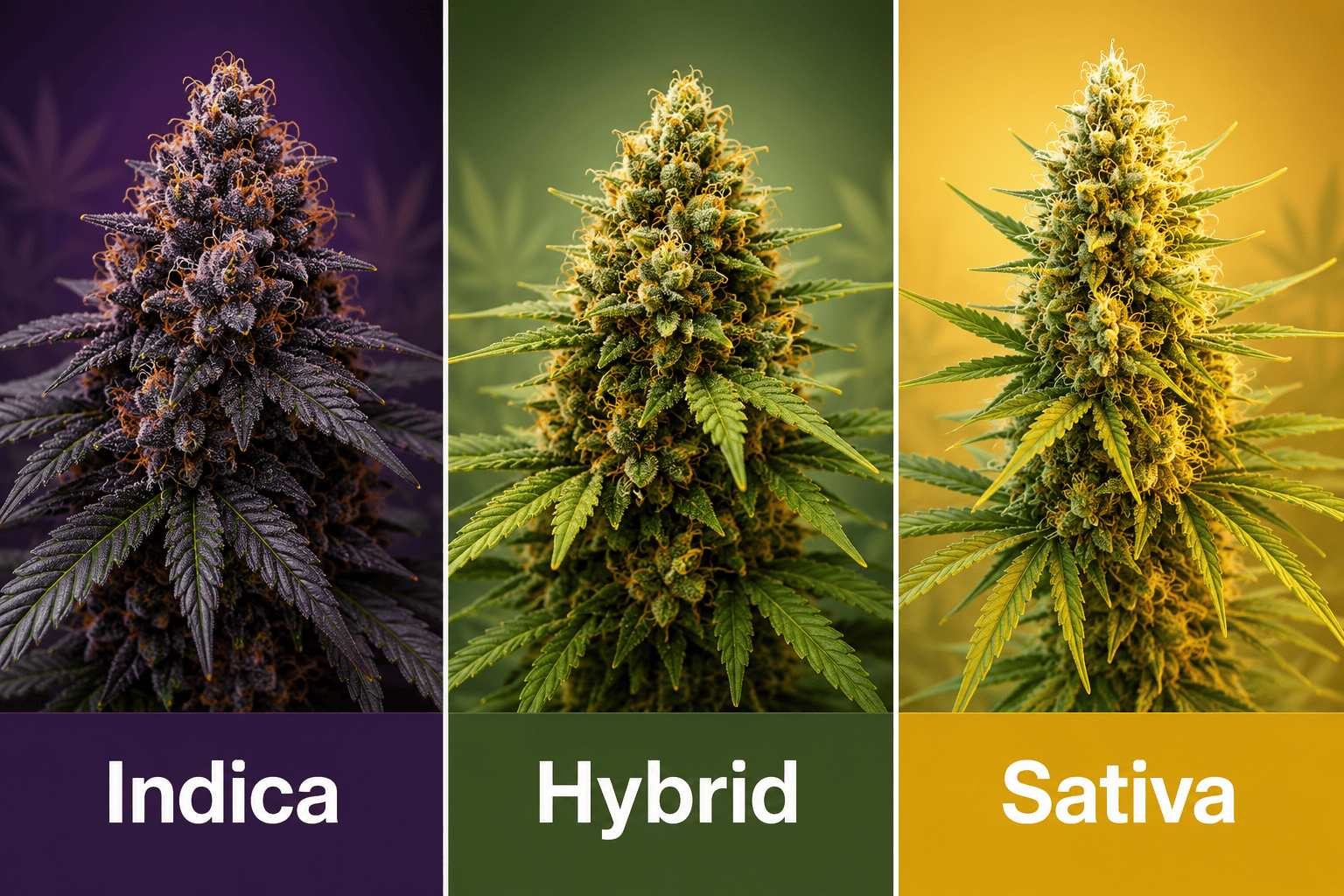
Many adult consumers describe indica-labelled products as relaxing, slow-paced, or better suited to quiet evening activities. One observational study found that products classified as indica-dominant were associated with more low-arousal effects, such as feeling sluggish or slowed down, although the researchers emphasized the need for additional controlled studies.
That helps explain why indica products have developed a nighttime reputation.
However, feeling sleepy after consuming cannabis does not necessarily mean sleep quality will improve. Cannabis may affect:
A review of recreational cannabis use and sleep found that many studies reported poorer sleep quality, particularly among people who consumed cannabis more heavily.
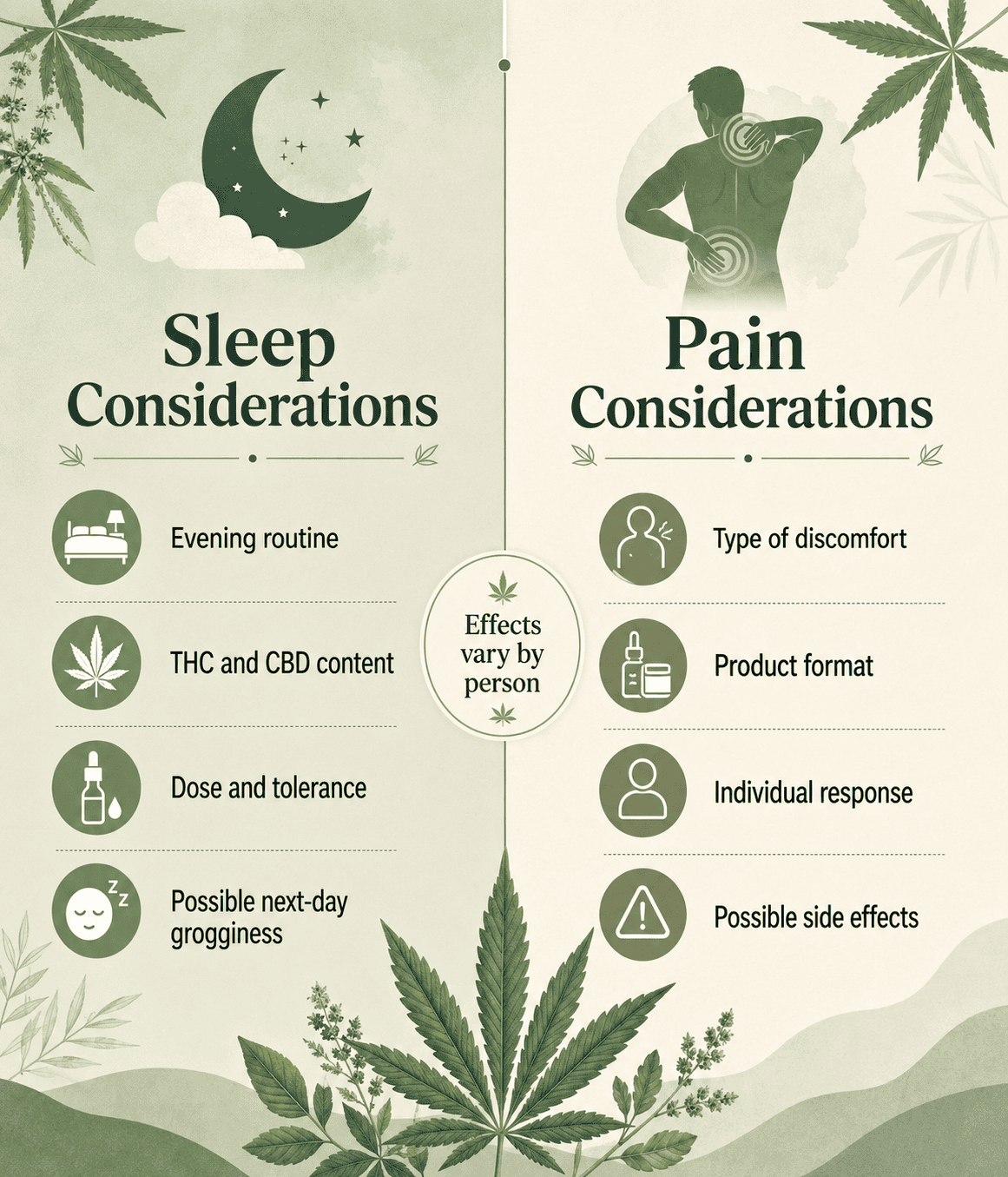
Some adults may feel that cannabis helps them settle down at night, while others may experience restlessness, anxiety, unusual dreams, or next-day grogginess.
Some adults report that cannabis makes them feel drowsy or helps them relax before bed. THC can cause sleepiness, but its effects depend on factors such as dose, frequency of use, personal tolerance, and product format. Health Canada lists sleepiness as a possible short-term effect of cannabis while also noting that cannabis can produce anxiety, confusion, and impaired concentration.
Research does not support the idea that every cannabis product improves sleep.
The relationship may also change with frequent use. Some research suggests that perceived sleep improvements can weaken as tolerance develops, potentially leading people to use cannabis more frequently or in greater amounts.
Persistent insomnia can have many possible causes. Someone who repeatedly struggles to fall asleep, remain asleep, or function during the day should consider discussing the issue with a healthcare professional rather than relying on a strain label.
Cannabis and cannabinoids have been studied for several kinds of chronic pain, including pain connected with nerve conditions.
A systematic review found that non-inhaled medical cannabis and cannabinoid products produced small to very small improvements in pain, physical functioning, and sleep quality among some people living with chronic pain. The same review also identified temporary side effects.
This means cannabis may be useful to some patients in medically supervised circumstances, but the evidence does not identify one strain as the best option for pain.
Pain is also not a single condition. It may be:
A product that one adult finds relaxing may not affect another person in the same way. It may also change how discomfort feels without addressing its underlying cause.
Cancer pain is one example of a medically complex condition where cannabis may be discussed as part of symptom support. Learn more in our guide to Cannabis for Cancer Pain Management in Canada: What Patients Should Know.
There are several reasons a universal “best strain” is difficult to identify.
The same or similar strain name may appear across different producers even when the products do not have identical chemical profiles.
Research has found that these commercial labels do not always accurately capture genetic and chemical differences between products.
Two indica-labelled products may contain very different amounts of THC and CBD.
Dried flower, oils, capsules, and edible products have different onset times and durations. This can affect how someone experiences the product.
Tolerance, metabolism, previous cannabis experience, medications, mood, setting, and health history can all influence the experience.
For these reasons, a strain name should be treated as one piece of product information—not a reliable promise about sleep or pain relief.
Looking beyond traditional strain categories? Cannabis extracts offer a different experience and are often chosen for their potency and convenience. Learn more in our guide to the Best Cannabis Extracts for Pain and Anxiety Relief.
Adults researching cannabis products should look beyond the name printed at the top of the product description.
THC is intoxicating and can produce drowsiness, altered perception, and impairment. Higher THC content can increase the likelihood of stronger impairment and unwanted effects.
CBD does not produce the same intoxicating high as THC. However, evidence for CBD as a general pain or sleep solution remains mixed, and its effects may vary by amount and individual circumstances.
A THC-dominant product may feel very different from a balanced product containing both THC and CBD. Any product containing THC may still be impairing.
The way cannabis is consumed influences when effects begin and how long they may last. Product format can therefore be just as important as the name of the strain.
Someone with little previous cannabis experience may respond differently from a frequent consumer. More THC does not automatically mean a better experience.
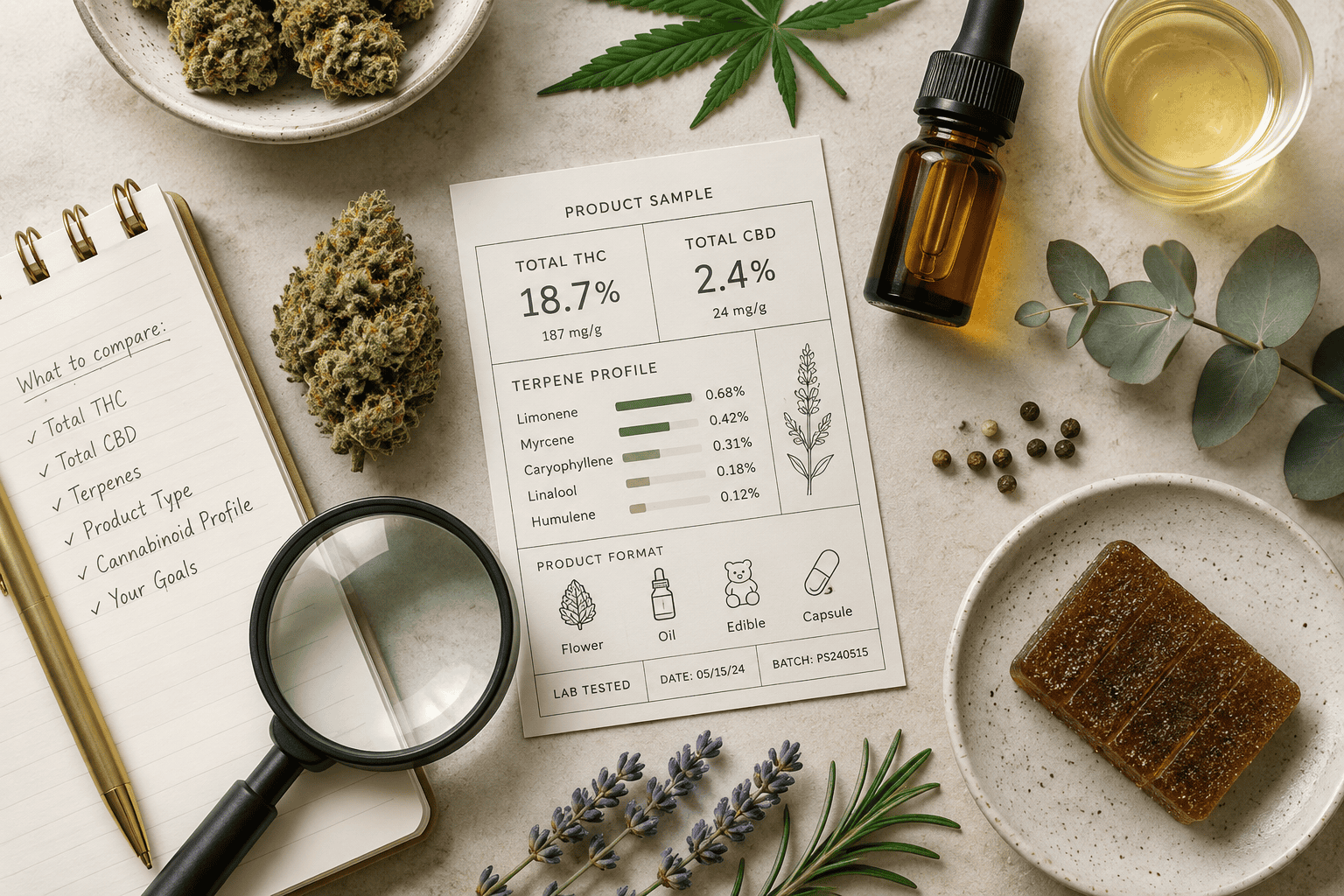
Terpenes are aromatic compounds that contribute to the scent and flavour of cannabis. Common examples include myrcene, limonene, pinene, linalool, and caryophyllene.
Terpenes are often used in product descriptions to suggest characteristics such as earthy, citrus, floral, spicy, or pine-like aromas. Some consumers also associate individual terpenes with particular experiences.
However, terpene content should not be treated as proof that a product will relieve pain or improve sleep. Research into how cannabinoids, terpenes, dose, and individual biology interact is still developing.
Terpene information can help adults compare aroma and flavour profiles, but it is not a substitute for medical evidence.
Cannabis can produce unwanted effects even when a product is marketed as calming or suited to evening use.
Possible short-term effects include:
Health Canada also warns that THC can impair a person and has the potential to lead to dependence.
A product associated with relaxation can therefore still feel uncomfortable or overly intense to some consumers.
Cannabis should never be combined with driving or other activities requiring attention and quick reactions.
Instead of relying only on terms such as indica, sativa, or nighttime strain, adults should review the full product description.
Useful details may include:
Descriptions such as “relaxing,” “heavy,” or “evening-friendly” are general characteristics, not guarantees.
Adults should also be cautious with product descriptions that promise to cure pain, eliminate insomnia, or create the same experience for everyone.
Professional guidance is especially important when sleep problems or pain:
CBD and THC may interact with medications, and cannabis may not be appropriate for everyone.
A healthcare professional can help investigate the underlying cause of persistent pain or poor sleep and discuss available options based on the person’s health history.
No. Indica-labelled products are commonly associated with lower-energy or relaxing experiences, but the label does not guarantee sleepiness or improved sleep. THC content, CBD content, dose, tolerance, and individual response may be more informative.
Some adults report falling asleep more easily, while others experience disrupted sleep or next-day grogginess. Research on recreational cannabis use has frequently identified poorer sleep quality among heavier users.
Current research does not identify one strain as the best option. Some medical cannabis and cannabinoid products may provide small improvements for certain chronic-pain patients, but results and side effects vary.
Some hybrid products are described as relaxing or indica-dominant, but the word hybrid alone does not predict the experience. The cannabinoid profile, potency, format, and individual response still matter.
Not necessarily. Higher THC can create stronger intoxication and may increase impairment or adverse effects. A higher number on the label does not guarantee a more comfortable or useful experience.
Still have questions about cannabis products, ordering, shipping, age verification, or membership? Visit our FAQ page for additional information and answers to common customer questions.
Indica, sativa, and hybrid labels can provide a familiar starting point, but they do not tell the entire story.
Many adults associate indica-labelled cannabis with relaxation and nighttime use. Research has also observed lower-arousal effects with some indica-dominant products. However, commercial strain categories are inconsistent, and no strain can be guaranteed to improve sleep or relieve pain.
A more informed approach is to consider THC and CBD content, potency, product format, personal tolerance, and the possibility of unwanted effects.
Readers looking for general information about King Tut’s membership, age verification, shipping, and customer support can consult the King Tut’s FAQ.

Copyright 2022 © All Rights Reserved.