
CBD oil is one of the most searched cannabis product formats in Canada. Many adults researching discomfort, chronic pain, inflammation, anxiety, sleep, or wellness come across phrases like best CBD oil for pain in Canada and want to understand what CBD oil is, how it differs from THC, and whether it may have a role in pain-related conversations.
CBD, short for cannabidiol, is a non-intoxicating cannabinoid found in cannabis. It does not create the same “high” associated with THC, but it can still affect the body and may interact with medications. For adults researching CBD oil for pain in Canada, the most important point is that the evidence is still developing.
Some people report using CBD oil as part of their wellness routine, but CBD oil should not be described as a guaranteed pain-relief product. Current research on CBD alone for pain is mixed, and some reviews have found limited evidence for CBD as a stand-alone pain treatment. A 2024 review in The Journal of Pain found that most randomized trials of CBD for pain did not show better pain relief than placebo.
This guide explains what Canadian adults should know about CBD oil, pain, product formats, THC content, possible side effects, and when to speak with a healthcare professional.
This article is for general education only and is not medical advice.
CBD oil is a cannabis product that contains cannabidiol in a carrier oil. Depending on the product, it may contain CBD only, trace amounts of THC, or a mixture of cannabinoids.
CBD oil is often used because it is easy to compare product labels. Adults can usually review the CBD amount, THC amount, serving information, ingredient list, and product warnings.
CBD oil may be described in different ways, including:
These terms are not always used consistently, so it is important to read the product details carefully. A product that contains THC may cause impairment, even if CBD is the main cannabinoid.
In Canada, CBD is regulated as cannabis. That means CBD products are subject to the same federal cannabis framework, even when the product is non-intoxicating.
Canadian adults should pay attention to:
Health Canada’s review of cannabidiol explains that CBD is not intoxicating in the same way as THC, but it can still affect the brain and nervous system.
CBD products should be stored securely away from children, pets, and anyone who should not consume cannabis.
Many adults search for CBD oil because they are looking for information about pain, soreness, stress, sleep, and general wellness.
Searches around best CBD oil pain Canada may come from people dealing with:
These are common reasons people research CBD, but search interest does not equal medical proof. Pain can have many causes, and persistent or worsening pain should be assessed by a healthcare professional.
Research on CBD and pain is still developing. Some adults report positive experiences, but controlled studies have not consistently shown CBD alone to be an effective pain treatment.
A 2024 review in The Journal of Pain concluded that CBD products for pain had limited evidence of benefit in randomized trials, with most studies showing no greater pain-relieving effect than placebo.
Broader cannabinoid research suggests that some THC-containing products may have more evidence for certain chronic pain conditions, such as neuropathic pain, but THC also carries a higher risk of impairment and side effects. A 2025 review noted moderate efficacy for cannabinoids in some pain conditions while also emphasizing the need to consider risks, product type, and patient differences.
A balanced way to understand the evidence is:
CBD and THC are both cannabinoids, but they affect the body differently.
CBD is non-intoxicating in the same way as THC. It may appeal to adults who want to avoid feeling high. However, CBD can still cause side effects and may interact with medications.
THC is intoxicating. It can affect reaction time, coordination, mood, sleepiness, and perception. Some pain-related cannabis research focuses more on THC-containing products than CBD-only products, but THC may also cause anxiety, dizziness, confusion, or impairment.
Some cannabis oils contain both THC and CBD. These products may still impair if THC is present. Adults should review product labels carefully and avoid driving or operating equipment after using THC-containing products.

Instead of looking for one “best CBD oil,” adults should compare product information carefully.
Important details include:
A strong CBD oil comparison should focus on clarity, consistency, and safety—not exaggerated claims.
CBD oil products may differ by cannabinoid content and formulation.
CBD isolate oil is typically made to contain CBD without other cannabinoids. However, consumers should still check product labels and testing information where available.
Broad-spectrum products may contain several cannabis compounds but are generally marketed as having no THC or very low THC. Labels matter.
Full-spectrum products may contain multiple cannabinoids and terpenes, including small amounts of THC. If THC is present, impairment may be possible depending on the amount.
Balanced oils contain both THC and CBD. These are not the same as CBD-only oils and should be approached with more caution because of THC’s intoxicating effects.
CBD oil is only one product format. Adults may also come across CBD gummies, capsules, beverages, topicals, or dried cannabis products.
Each format has different considerations:
No format should be described as automatically best for pain. The right format depends on the person, product, reason for use, and healthcare guidance.

Yes. CBD can cause side effects, even though it is often marketed as gentle.
Possible side effects may include:
Products containing THC may also cause intoxication, anxiety, confusion, impaired coordination, and slower reaction time.
Health Canada notes that CBD can affect the brain and nervous system and that more research is needed around many uses.
Yes. CBD may interact with some medications.
This is especially important for adults taking:
People taking prescription medication should speak with a healthcare professional or pharmacist before using CBD oil for health-related reasons.
CBD oil should not be used to ignore or mask serious symptoms.
Adults should seek medical guidance if pain is:
Pain is a signal. Understanding the cause matters.
Adults researching CBD oil in Canada should take a careful, informed approach.
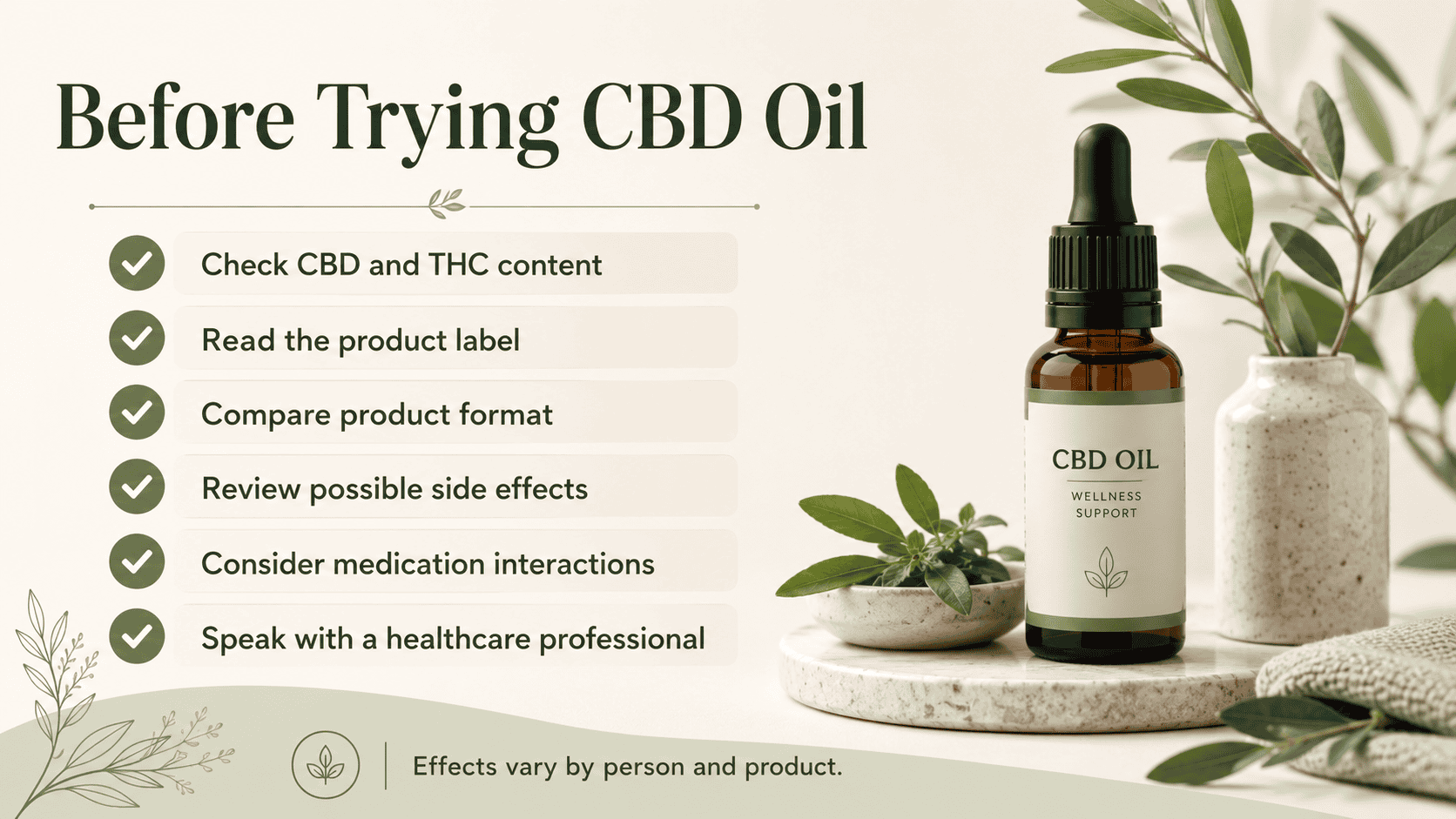
A safer checklist includes:
Health Canada recommends that people using cannabis for medical purposes consult a healthcare provider, especially when other medications or health conditions are involved.
There is no single best CBD oil for everyone. CBD products vary by CBD content, THC content, product format, serving information, and individual response. Adults should compare labels carefully and speak with a healthcare professional for ongoing pain.
Some adults report using CBD oil as part of a wellness routine, but research on CBD alone for pain is mixed. A 2024 review found limited evidence that CBD products provide pain relief beyond placebo in randomized trials.
No. CBD oil and THC-containing cannabis oil are different. CBD is not intoxicating in the same way as THC, while THC can cause impairment and a high.
CBD is regulated as cannabis in Canada. Adults should follow federal and provincial cannabis rules and review legal-source product labels carefully.
CBD can interact with some medications. Adults taking prescription medication should speak with a healthcare professional or pharmacist before using CBD oil.
CBD does not produce the same intoxicating high as THC. However, products that contain THC may cause impairment, depending on the amount.
Searches for best CBD oil for pain in Canada and buy CBD oil Canada show that many adults are curious about CBD oil, discomfort, and wellness. CBD oil is popular because it is non-intoxicating in the same way as THC and often easier to compare by label.
However, CBD oil should not be presented as a guaranteed pain-relief product. Evidence for CBD alone and pain remains mixed, and pain can have many causes. THC content, product format, medication interactions, side effects, and individual response all matter.
For Canadian adults, the best approach is to stay informed, compare product labels carefully, avoid exaggerated claims, and speak with a healthcare professional when pain is ongoing, severe, or health-related.

Copyright 2022 © All Rights Reserved.