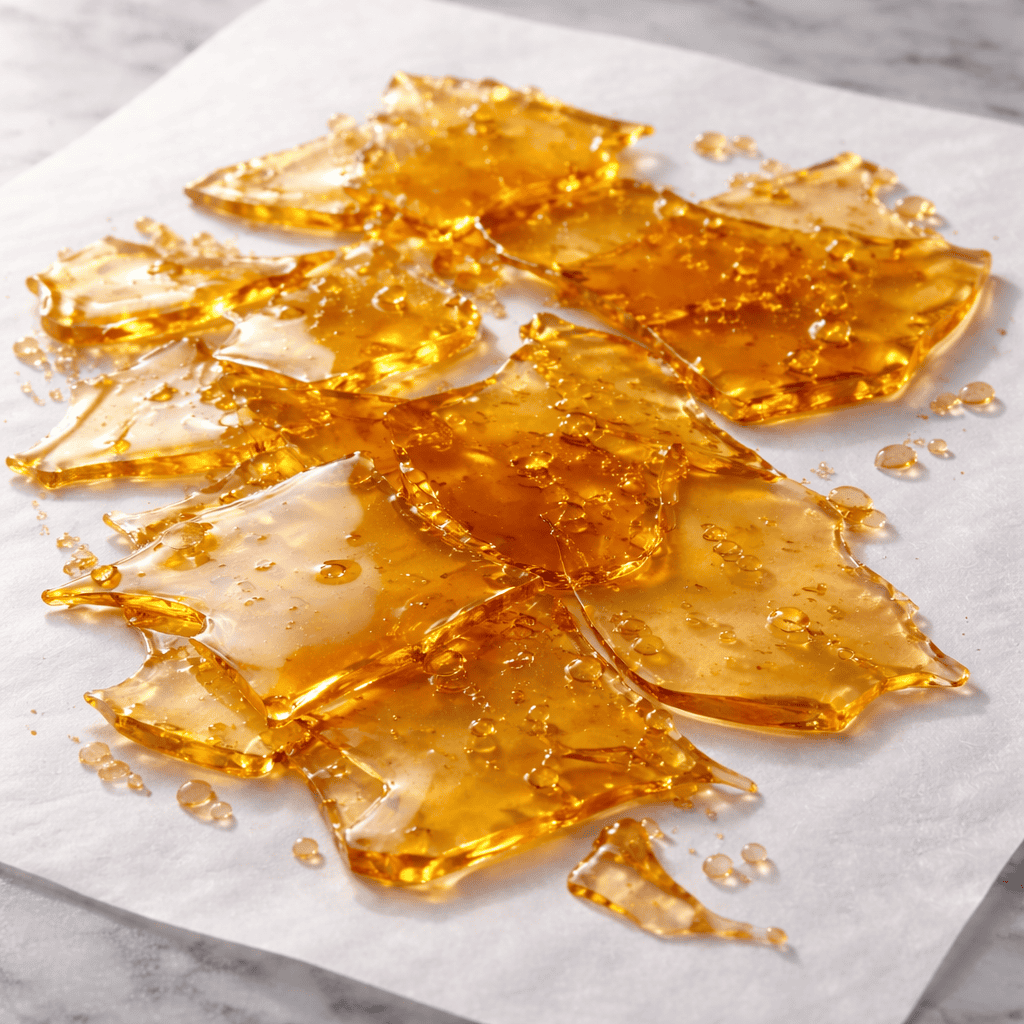
WHAT BAD SHATTER LOOKS LIKE
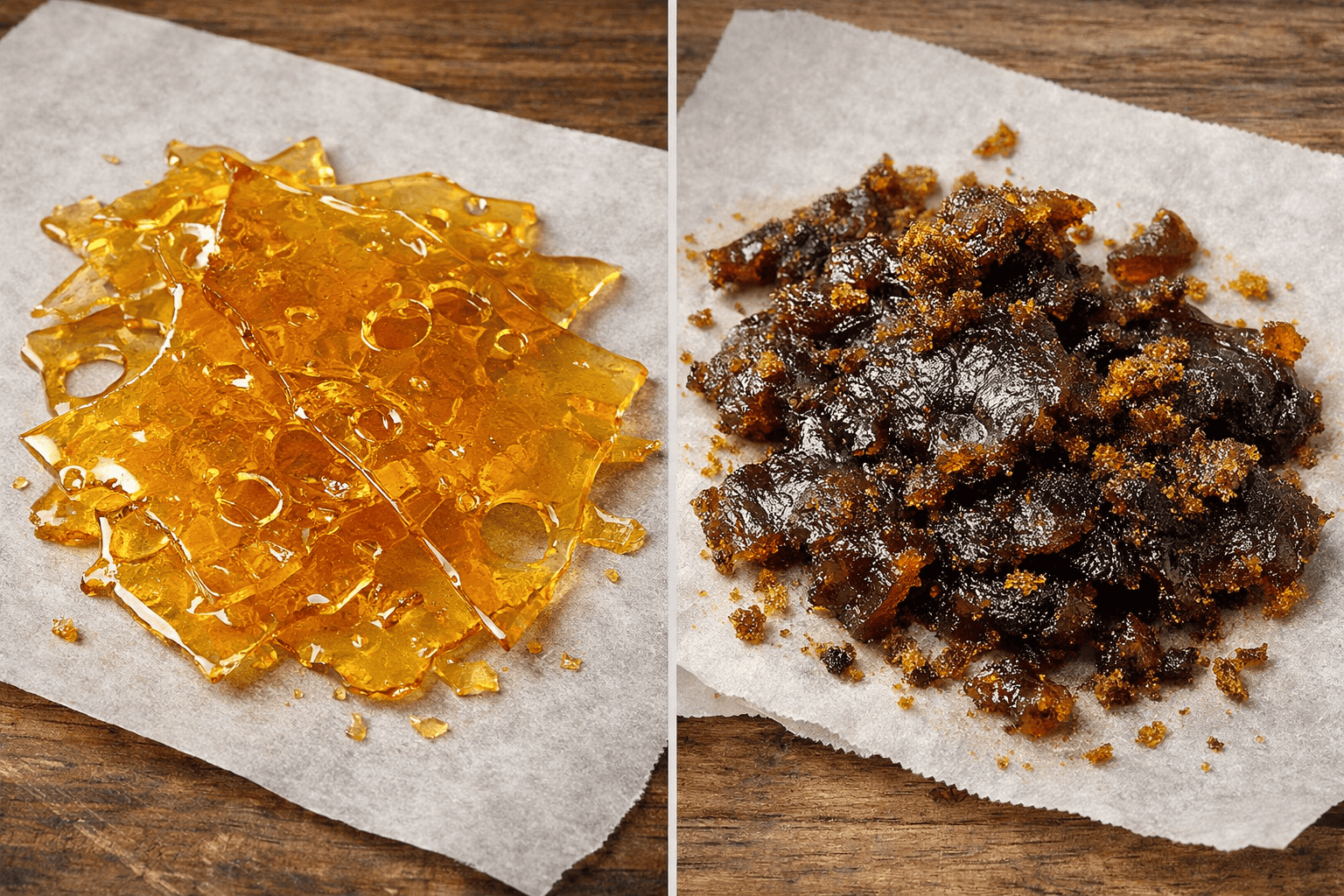
Bad shatter tends to unravel a little.
Not always dramatically. Sometimes it’s subtle. But there are signs, and once you recognize them, they stand out immediately.
1. Too Dark
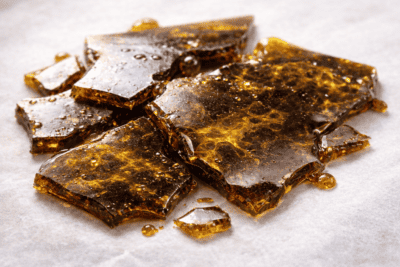
If it’s deep brown or edging into near-black, that’s usually pointing to an issue earlier in the process.
Lower-quality starting material. Older plant matter. Or extraction that pulled more than it should have.
Darker shatter isn’t automatically unusable. But it’s rarely where quality lives.
2. Cloudy or Opaque
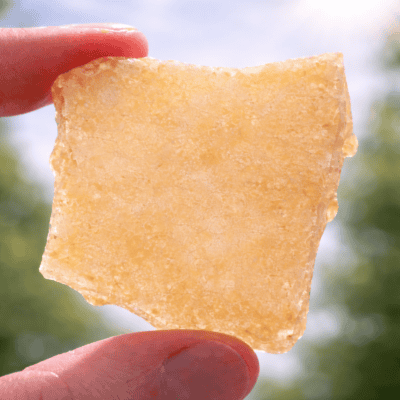
Shatter is known for clarity.
So when it looks foggy, milky, or flat, something disrupted that structure.
Cloudiness often means instability. The compounds didn’t settle into that clean, glass-like formation shatter is known for.
It might still get the job done. But visually, it’s already telling you it’s not at its best.
3. Sticky Instead of Snappy
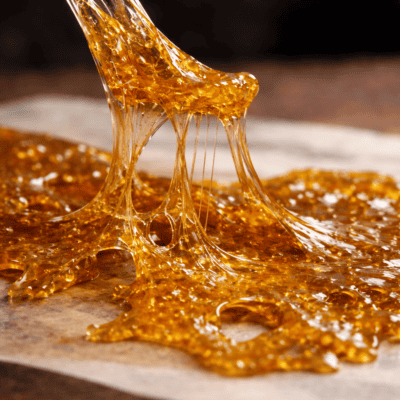
This one is immediate.
You go to break it… and it stretches.
Instead of snapping, it bends, pulls, or sticks to your fingers like it’s trying to stay attached.
At that point, you’re not handling shatter. You’re managing it.
This usually comes from heat exposure or poor storage. Even good shatter can end up like this if it’s been sitting in the wrong conditions.
4. Sugaring or Crystallizing
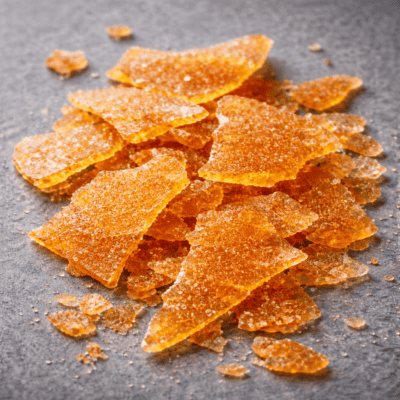
Sometimes shatter develops a grainy, sugar-like texture over time.
This process, called nucleation, happens when heat, light, or air exposure disrupts the structure.
The smooth, glass-like consistency starts to break down into tiny crystals.
It’s not dangerous. But it’s no longer what it was meant to be.
At that point, it’s less about quality and more about decline.
HOW IT SHOULD SMELL (AND WHY IT MATTERS)
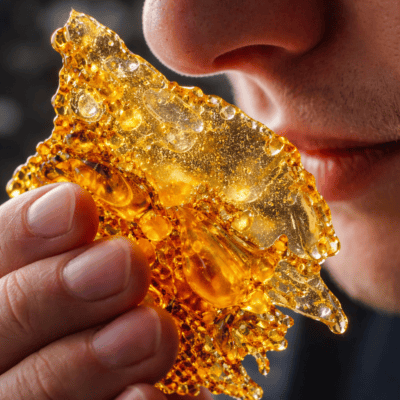
Smell is where things get honest.
Because even if something looks decent, the aroma will tell you what’s really going on.
Good shatter has a clear, noticeable scent.
Not overwhelming. Not artificial. Just distinct.
You might pick up citrus, pine, gas, sweetness, or something earthy depending on the strain. But whatever it is, it feels intentional.
It smells alive.
Bad shatter tends to fall flat.
Muted. Dull. Sometimes harsh or slightly burnt.
In some cases, there’s almost no smell at all, which is its own kind of red flag.
Because that usually means the terpenes, the compounds responsible for aroma and flavour, have degraded or disappeared.
And when those are gone, the experience tends to follow.
WHY SHATTER GOES BAD
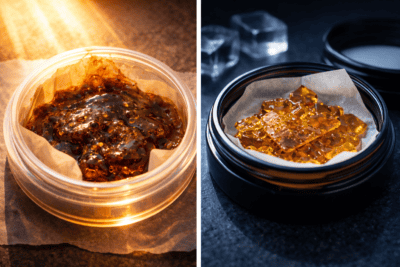
Shatter doesn’t randomly lose quality.
It’s usually a result of how it was made or how it was treated after.
And it’s surprisingly sensitive.
Poor Starting Material
Everything starts here.
If the cannabis used for extraction wasn’t high quality, the final product won’t magically improve.
Shatter tends to amplify what it comes from. Good in, good out. The opposite also applies.
Improper Processing
Extraction is precise.
If temperatures are too high, or the process isn’t controlled properly, it can damage cannabinoids and terpenes.
That shows up later as darker colour, weaker aroma, or unstable texture.
Exposure to Heat, Light, or Air
This is where a lot of good shatter quietly turns into average shatter.
Heat softens it. Light degrades it. Air slowly alters its structure.
Left unchecked, these factors push shatter toward that sticky, cloudy, or sugary state.
Poor Storage
This is the part most people underestimate.
Shatter needs to be stored in a cool, dark, airtight environment.
Not in a warm room. Not loosely wrapped. Not somewhere it’s constantly exposed.
It’s delicate. And it remembers how it was treated.
DOES STRAIN OR EXTRACTION STYLE MATTER?
A little, but not as much as people think.
Different strains can influence colour and aroma slightly. Some naturally lean darker or more golden depending on their profile.
But quality still follows the same rules.
Clean extraction, good starting material, and proper storage will always show.
You can’t hide poor handling behind a strain name.
CAN YOU STILL USE BAD SHATTER?
You can.
Nothing about slightly degraded shatter makes it unusable in most cases.
But the experience shifts.
It’s harsher. Less flavourful. Less enjoyable overall.
The smoothness isn’t there. The taste feels muted or off. The whole thing becomes… less intentional.
And that’s usually the part people notice most.
Because once you’ve had good shatter, the contrast is obvious.
It’s like going from something refined to something that just exists.
HOW TO STORE SHATTER PROPERLY
If you want to keep good shatter from becoming bad shatter, storage matters more than people expect.
Keep it in a cool place. Room temperature at most, but cooler is better.
Avoid direct light completely. UV exposure breaks things down faster than you’d think.
Seal it properly. Air exposure slowly changes the texture and terpene profile.
If you’re storing it longer-term, refrigeration can help. Just make sure it’s sealed tightly to avoid moisture issues.
Think of it less like a shelf product and more like something that needs to be preserved.
Because it does.
FINAL THOUGHT
There’s something very telling about the way shatter presents itself.
The good kind doesn’t need explaining.
It looks right. Feels right. Breaks the way it should.
Everything about it is aligned.
And the bad kind?
It usually tells on itself.
You just have to know what you’re looking at.
And once you do, it becomes a lot harder to settle for anything less.