
Cancer pain can be complex. It may come from the cancer itself, cancer treatments, surgery, nerve changes, inflammation, or other health issues happening at the same time. Because pain can affect sleep, appetite, mood, mobility, and quality of life, some Canadian patients and caregivers look for information about cannabis for cancer pain management in Canada.
Medical cannabis is sometimes discussed as part of symptom support for adults living with cancer. However, it is important to approach the topic carefully. Cannabis does not treat or cure cancer, and it should not replace chemotherapy, radiation, immunotherapy, surgery, prescription pain medication, palliative care, or guidance from an oncology team. Ontario Health states that cannabis does not treat cancer or lower the risk of getting cancer.
The research on cannabis and cancer pain is mixed. Some studies suggest certain patients may report improvements in pain, nausea, vomiting, sleep, or overall comfort, while randomized trials have not always shown cannabis to perform better than placebo for cancer-related pain or opioid-sparing outcomes.
This guide explains what Canadian patients should know about medical cannabis, cancer pain, THC, CBD, possible side effects, and why conversations with a cancer-care team are so important.
This article is for general education only and is not medical advice.
Cancer-related pain can happen for many reasons. It may be caused by a tumour pressing on nerves, bones, organs, or soft tissue. It can also occur after surgery, chemotherapy, radiation, or other treatments.
Cancer pain may feel different depending on the cause. Some patients describe it as aching, burning, stabbing, pressure, soreness, tingling, or nerve-like discomfort.
Cancer pain can also change over time. It may be:
Because cancer pain can have different causes, it should be assessed by a healthcare professional. The best pain-management plan often depends on the type of cancer, stage of illness, treatment plan, medications, and the patient’s overall health.
Some Canadian patients ask about cannabis because they are looking for additional symptom support. Others may be interested because they have heard about medical cannabis from other patients, online communities, caregivers, or wellness content.
Patients may ask whether cannabis could play a role in:
BC Cancer says medical cannabis may help with some symptoms and side effects of cancer and cancer treatments, while also advising patients to talk to their healthcare team before trying it.
This is the key point: cannabis may be part of a conversation about symptom support, but it should be discussed in the context of the patient’s complete medical plan.
If you’re exploring cannabis for symptom support, it can also be helpful to understand how cannabis strains are labeled. Our guide to Cannabis Strain Labels, Sleep and Pain: What Canadians Should Know explains common terms such as indica, sativa, hybrid, and terpenes, and how they relate to patient experiences.
Research on medical cannabis for cancer pain is still developing. The current evidence does not support saying that cannabis works for every cancer patient or that one product is best for cancer pain.
A 2024 review on medical marijuana for cancer-associated pain found mixed results. Some investigations showed associations with lower pain levels and improvements in nausea and vomiting. However, randomized controlled trials found that placebo-level benefits were comparable to medical marijuana for cancer-related pain and opioid-sparing outcomes.
That means cannabis may be promising for some patients, but the evidence is not strong enough to make broad claims.
A balanced way to understand the research is:
For patients, this means cannabis should be discussed with realistic expectations.
No. Cannabis should not be used as a replacement for prescribed cancer pain medication unless a qualified healthcare professional is directly involved in that decision.
Cancer pain is often treated with a careful plan that may include opioids, non-opioid pain medications, nerve pain medications, anti-inflammatory medications, palliative-care support, radiation, procedures, or other approaches.
BC Cancer advises patients with cancer pain to take pain medication exactly as instructed by their healthcare team and to speak with their care team before taking medical cannabis.
Patients should not stop, reduce, or replace prescribed medication based on online information, product marketing, or another person’s experience.
THC stands for tetrahydrocannabinol. It is the main intoxicating cannabinoid in cannabis.
THC can affect mood, perception, appetite, sleepiness, attention, reaction time, and coordination. Some patients may find THC-containing products noticeable or calming, while others may feel uncomfortable, anxious, dizzy, confused, or overly sedated.
For cancer patients, THC may be discussed in relation to symptoms such as pain, appetite, nausea, or sleep. However, THC can also increase impairment and may interact with other medications.
Patients should be especially cautious if they are already taking medications that cause sleepiness, dizziness, confusion, or slowed reaction time.
If you have discussed THC with your healthcare team and are interested in learning more about available product formats, explore our cannabis extracts category. Our selection may include oils, concentrates, and, when available, Rick Simpson Oil (RSO), alongside other high-THC extract products.
CBD stands for cannabidiol. CBD does not produce the same intoxicating high as THC, but it is still active in the body.
Some patients are interested in CBD because it is often described as non-intoxicating. However, non-intoxicating does not mean risk-free. CBD may interact with medications and may not be appropriate for every patient.
CBD is commonly discussed in relation to inflammation, pain, sleep, anxiety, and wellness. However, it should not be presented as a proven cancer treatment or a guaranteed cancer pain solution.
Ontario Health notes that cannabis and cannabinoids are not usually recommended as the first option for most health problems, including cancer symptoms or cancer treatment side effects. It also notes that some medical cannabinoids may help with certain cancer-treatment side effects when other recommended options do not help.
If you and your healthcare provider decide that CBD may be appropriate for your situation, you can explore our selection of CBD products, including oils, capsules, gummies, and other non-intoxicating options available at King Tut’s Cannabis.

Cancer pain is often connected with other symptoms. A patient experiencing pain may also struggle with sleep, appetite, nausea, fatigue, anxiety, or reduced quality of life.
Some cannabinoid-based prescription medications in Canada may be used in specific cases for chemotherapy-related nausea and vomiting when other options have not worked. Ontario Health notes that some medical cannabinoids may help with nausea and vomiting caused by chemotherapy, pain in people receiving palliative care, and pain related to nerve damage or nervous-system problems.
This does not mean that all cannabis products provide the same effect. A regulated cannabinoid medication, dried flower, oil, edible, capsule, or vape product may differ in strength, onset time, duration, side effects, and suitability.
Patients should ask their healthcare team which options are appropriate for their situation.
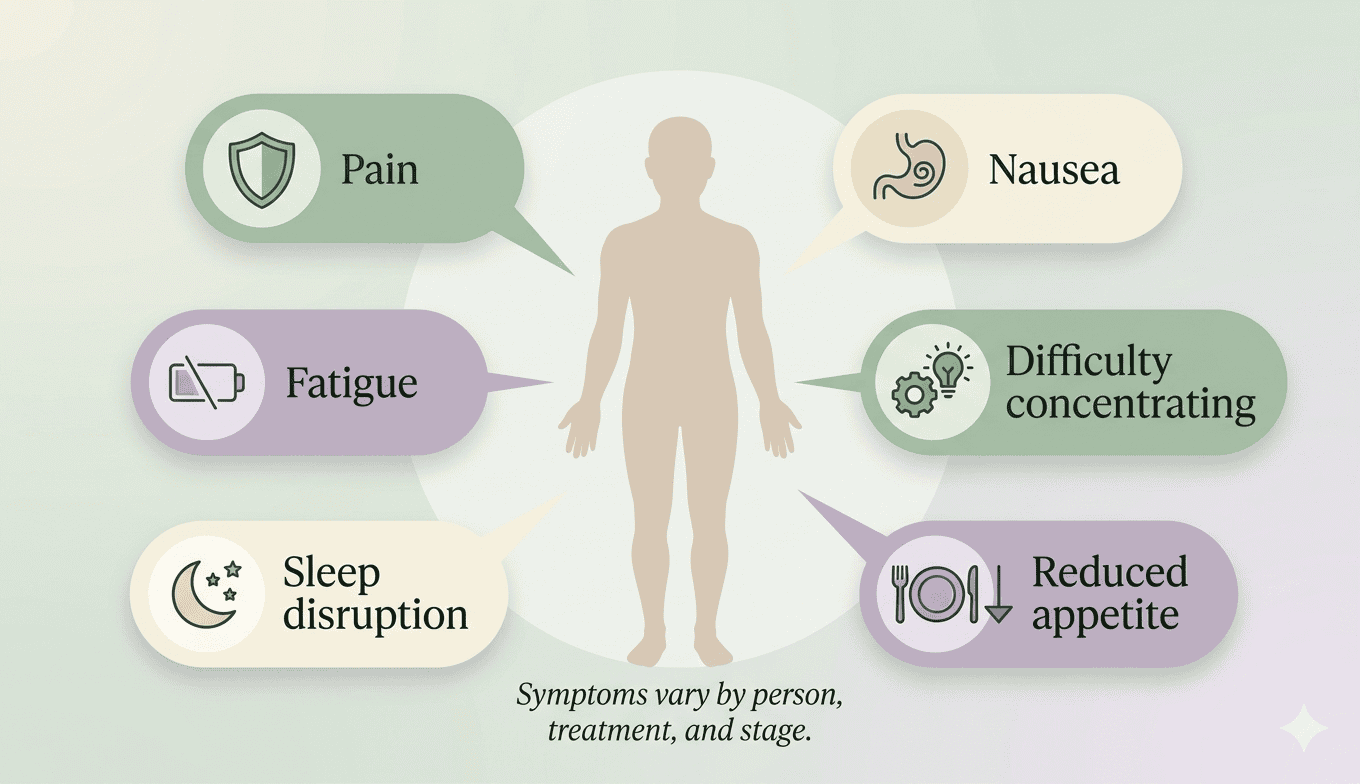
Cannabis may come up more often in palliative-care conversations because the focus is often on comfort, symptom support, quality of life, appetite, sleep, and reducing distress.
For some patients, the goal may not be complete pain elimination. It may be improving comfort enough to rest, eat, connect with family, or manage difficult treatment days.
Even in palliative care, cannabis should be discussed with the healthcare team. Patients may already be using opioids, anti-nausea medications, sedatives, antidepressants, sleep medications, or other treatments. Combining cannabis with these products may increase side effects such as sedation, confusion, dizziness, or falls.
Cannabis can cause side effects. These may be more concerning for cancer patients who are already dealing with fatigue, nausea, pain, weight changes, treatment side effects, or multiple medications.
Possible side effects may include:
Ontario Health lists possible cannabis-related risks, including mental-health effects, addiction risk, and other side effects.
Patients should also avoid driving or operating equipment after using any THC-containing cannabis product.
Yes, cannabis may interact with medications or affect how a patient feels during treatment.
This is especially important for patients taking:
Cannabis may increase drowsiness, dizziness, confusion, or impairment when combined with certain medications. CBD may also affect how some medications are processed in the body.
Because cancer treatment can be complex, patients should tell their oncology team about any cannabis, CBD, THC, supplements, or herbal products they are using or considering.
No. Cannabis should not be described as a cancer treatment.
Cannabis may be studied or discussed in relation to certain symptoms or treatment side effects, but it is not a replacement for evidence-based cancer care.
Ontario Health clearly states that cannabis does not treat cancer or lower the risk of getting cancer. Cancer Australia also states that there is currently no evidence that medicinal cannabis can treat or cure cancer or inhibit cancer growth.
Patients should be cautious of any website, product, or social media post that claims cannabis cures cancer, fights tumours, replaces chemotherapy, or guarantees survival outcomes.
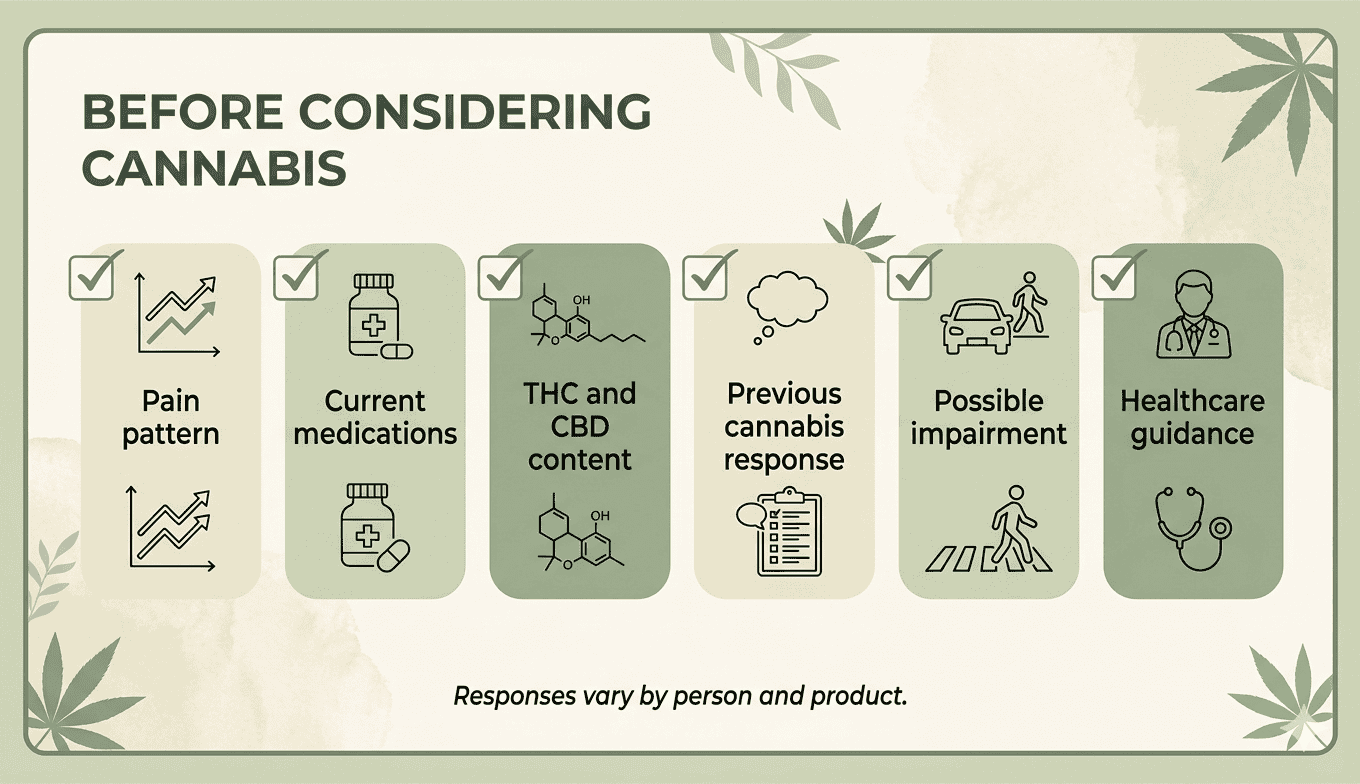
Patients who are curious about cannabis should prepare for an open and honest conversation with their healthcare team.
Useful questions include:
Patients should also tell their care team if they are already using cannabis. Healthcare professionals can give better guidance when they know the full picture.
Cancer patients should not ignore new, severe, or changing pain.
Seek urgent medical guidance if pain is:
Pain can signal changes that need medical attention. Cannabis should not be used to mask serious symptoms without speaking to a healthcare professional.
For Canadian patients, the most important message is balance.
Cannabis is legal for adults in Canada, and medical cannabis may be discussed as part of symptom support in some situations. However, cancer pain is medically complex, and cannabis is not automatically safe, suitable, or effective for every patient.
Patients should remember:
Some studies and patient reports suggest cannabis may help certain patients with symptoms such as pain, nausea, vomiting, appetite, or sleep. However, the research on cancer pain is mixed, and cannabis should not be described as a guaranteed pain-management solution.
Cannabis is legal for adults in Canada, and medical cannabis can be accessed through Canada’s medical cannabis framework. Patients should still speak with their healthcare team before using cannabis for cancer-related symptoms.
There is no universal answer. THC is intoxicating and may create stronger noticeable effects, while CBD is not intoxicating in the same way but can still affect the body and interact with medications. The right discussion depends on the patient’s symptoms, medications, treatment plan, and health history.
Some cannabinoid-based prescription medications in Canada may help with chemotherapy-related nausea and vomiting when other recommended treatments do not work. Ontario Health notes that some medical cannabinoids may help with certain cancer-treatment side effects in specific cases.
No. Cannabis does not treat or cure cancer and should not replace oncology treatment. Patients should be cautious of any claim suggesting cannabis can shrink tumours, cure cancer, or replace medical treatment.
Yes. BC Cancer advises patients to talk to their healthcare team before trying medical cannabis. This is especially important because cancer patients may be taking several medications or undergoing treatments that could interact with cannabis.
Interest in cannabis for cancer pain management in Canada continues to grow. Some patients ask about cannabis because they are looking for support with pain, nausea, appetite, sleep, or comfort during cancer treatment or palliative care.
The most responsible answer is that cannabis may be worth discussing with a healthcare team, but it is not a proven cure, not a replacement for cancer treatment, and not a guaranteed pain-management option. Research is mixed, and patient experiences vary.
For Canadian patients and caregivers, the safest next step is education followed by a direct conversation with the oncology or palliative-care team. Cannabis decisions should be made with full awareness of symptoms, medications, treatment goals, possible side effects, and individual health history.
For general King Tut’s Cannabis questions about membership, age verification, shipping, order support, and customer service, readers can visit the King Tut’s FAQ.

Copyright 2022 © All Rights Reserved.