 CBD Creams for Joints and Arthritis Pain: A Canadian Guide
CBD creams and cannabis topicals have become a common topic in Canada as more adults search for information about joint discomfort, arthritis-related pain, stiffness, and localized soreness. Many people are curious about whether a CBD cream is different from CBD oil, whether topicals work only where they are applied, and what the research says about CBD and arthritis.
CBD, short for cannabidiol, is a cannabinoid found in cannabis. It is not intoxicating in the same way as THC, but it can still affect the body. Health Canada notes that CBD use comes with safety questions and unknowns, including limited long-term research, possible side effects, possible drug interactions, and the risk that products may not be used as intended.
This guide explains what CBD creams are, how topicals differ from oils and edibles, what Canadian adults should know about arthritis-related joint pain, and why persistent joint symptoms should be discussed with a qualified healthcare professional.
This article is for general education only and is not medical advice.
What Is CBD Cream?
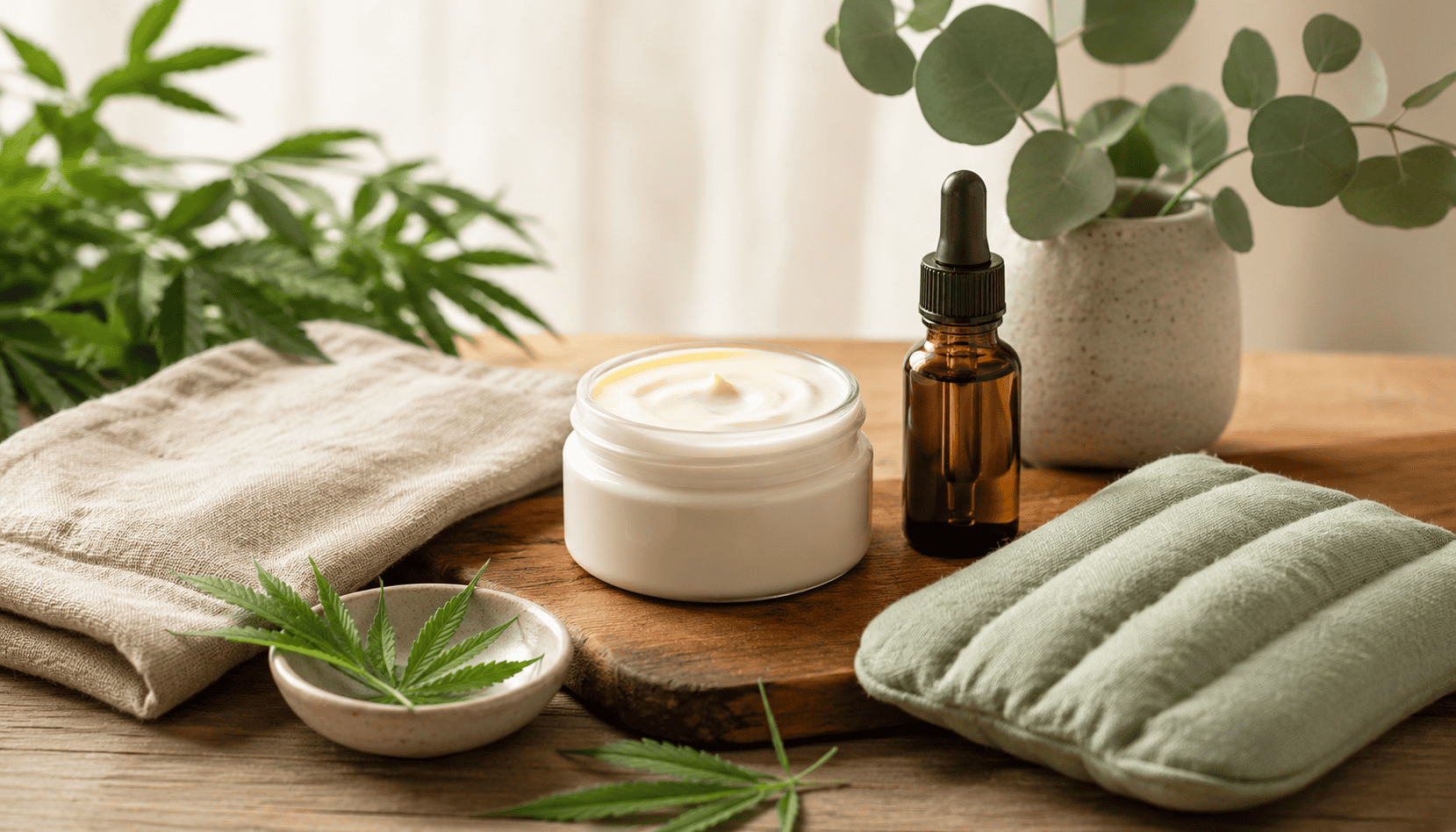
CBD cream is a topical product that is applied to the skin. Topical cannabis products may also be described as balms, lotions, salves, rubs, gels, or creams.
Unlike edibles or oils that are swallowed, a topical is applied directly to a specific area of the body. People may apply topicals to areas such as hands, knees, shoulders, elbows, wrists, or other joints.
CBD creams may include ingredients such as:
- CBD or other cannabinoids
- Carrier oils
- Beeswax or plant waxes
- Menthol
- Arnica
- Essential oils
- Moisturizers
- Cooling or warming ingredients
These extra ingredients matter. In some products, the cooling, warming, moisturizing, or massage effect may contribute to how the product feels on the skin.
Why Do People Ask About CBD Creams for Joints and Arthritis Pain?
Joint discomfort can affect daily activities such as walking, gripping, typing, exercising, working, or sleeping. Arthritis-related pain can also come and go, depending on the condition, activity level, inflammation, weather, stress, sleep, and other health factors.
Adults may search for CBD cream and joint pain because they are looking for information about:
- Localized joint discomfort
- Arthritis-related stiffness
- Hand or thumb soreness
- Knee or shoulder discomfort
- Topical cannabis products
- CBD vs THC topicals
- Non-intoxicating cannabis formats
- Alternatives to inhaled cannabis
- Product ingredients and label reading
Interest in CBD cream does not prove that CBD cream works for arthritis pain. Joint pain can have many causes, and the right approach depends on the diagnosis and the person’s health history.
What Does Research Say About CBD Cream and Arthritis?
Research into CBD topicals and arthritis is still limited, but there are some early studies.
A small randomized controlled trial published in 2022 studied topical CBD for thumb basal joint arthritis and reported improvements in arthritis-related pain and disability without adverse events. However, this was a single-centre study focused on a specific type of arthritis and product approach, so it should not be treated as proof that all CBD creams work for all joint pain.
Arthritis Foundation guidance notes that topical CBD products are applied over painful joints, but whether those products reliably deliver CBD below the skin is not clear. It also notes that results across small topical CBD studies have been mixed.
Health Canada’s information for healthcare professionals says clinical evidence for cannabis in arthritis remains very limited.
A balanced way to understand the evidence is:
- Some early research is promising.
- Human evidence is still limited.
- Results may vary by product, condition, and person.
- Topicals are not proven to work for every type of joint pain.
- Medical guidance matters for arthritis or persistent joint symptoms.
CBD Cream vs CBD Oil: What Is the Difference?
CBD cream and CBD oil are different product formats.
CBD cream
CBD cream is applied to the skin. It is usually used as a localized topical product. The person may apply it directly to the area they are curious about, such as a joint or muscle area.
CBD oil
CBD oil is usually swallowed or used according to product instructions. It is absorbed differently from a topical cream and may have a broader body-wide effect depending on the product and person.
Why format matters
Product format can affect:
- How the product is absorbed
- How long it may take to feel
- Whether THC is present
- Whether impairment is possible
- Whether medication interactions are a concern
- Whether the product is intended for localized or whole-body use
CBD cream should not be treated the same as CBD oil, gummies, capsules, or inhaled cannabis. Each format has different considerations.
CBD cream is only one way adults use CBD products. For a closer look at oral CBD, potential effects, safety considerations, and what current research suggests, read our guide to CBD Oil for Pain in Canada: What Adults Should Know.
CBD, THC and Balanced Topicals
Some topical cannabis products may contain CBD only, THC only, or both THC and CBD.
CBD topicals
CBD topicals are often chosen by adults who want to avoid the intoxicating high associated with THC. However, CBD can still raise safety questions depending on the product, skin condition, and other medications.
THC topicals
THC is the intoxicating cannabinoid in cannabis. Some topical products may contain THC, but the experience can depend on product type and formulation.
Balanced topicals
Balanced products may contain both THC and CBD. “Balanced” does not always mean predictable or risk-free.
Anyone comparing cannabis topicals should read the label carefully and avoid assuming that one cannabinoid profile is automatically better for arthritis or joint pain.
What Ingredients Should Adults Compare?
When reviewing CBD creams or topical cannabis products, adults should pay attention to the full ingredient list, not just the CBD amount.
Useful comparison points include:
- CBD content
- THC content
- Product format
- Fragrance or essential oils
- Menthol or cooling ingredients
- Warming ingredients
- Moisturizers
- Allergens
- Intended use area
- Skin warnings
- Package instructions
- Whether the skin is broken or irritated
People with sensitive skin, allergies, eczema, psoriasis, or open wounds should be especially cautious with topical products.
Possible Side Effects and Skin Sensitivity
Topicals can still cause unwanted effects, especially on sensitive skin.
Possible concerns include:
- Skin irritation
- Redness
- Itching
- Rash
- Burning or stinging sensation
- Allergic reaction
- Sensitivity to fragrance or essential oils
- Unexpected effects from other ingredients
A topical should not be applied to broken skin, infected skin, eyes, or mucous membranes unless a healthcare professional has specifically advised it.
If irritation occurs, the product should be washed off and medical advice should be considered, especially if symptoms are severe or do not improve.
When Joint Pain Should Be Checked by a Healthcare Professional
Joint pain should not be ignored if it is persistent, worsening, or affecting daily life.
Adults should speak with a healthcare professional if joint pain is:
- Severe
- Sudden
- Getting worse
- Linked to swelling, warmth, or redness
- Connected with fever
- Associated with weakness or numbness
- Caused by an injury
- Affecting walking, gripping, sleeping, or daily function
- Lasting longer than expected
- Different from their usual pain pattern
Arthritis has different forms, including osteoarthritis, rheumatoid arthritis, psoriatic arthritis, gout, and other inflammatory conditions. The right approach depends on the cause.
Frequently Asked Questions
What is CBD cream?
CBD cream is a topical product applied to the skin. It may include CBD along with carrier oils, moisturizers, cooling ingredients, warming ingredients, or botanical extracts.
Does CBD cream help arthritis pain?
Research is still limited. A small 2022 trial reported improvements in thumb arthritis-related pain and disability, but evidence is not strong enough to say that all CBD creams help all arthritis pain.
Is CBD cream the same as CBD oil?
No. CBD cream is applied to the skin, while CBD oil is usually swallowed or used according to product instructions. The body may absorb and experience these formats differently.
Can CBD cream cause side effects?
Yes. Possible side effects include skin irritation, redness, itching, rash, or sensitivity to other ingredients such as menthol, fragrance, or essential oils.
Should arthritis pain be checked by a doctor?
Yes, especially if pain is persistent, worsening, swollen, warm, injury-related, or interfering with daily life. Joint pain can have many causes and may require proper diagnosis.
Final Thoughts
CBD creams and cannabis topicals are a growing topic among Canadian adults researching joint discomfort and arthritis-related pain. These products are different from oils, edibles, and inhaled cannabis because they are applied directly to the skin.
Early research into topical CBD and arthritis is interesting, but the evidence remains limited. Product ingredients, skin sensitivity, THC and CBD content, health history, and the cause of joint pain all matter.
The safest first step is education. Adults should read labels carefully, be cautious with skin reactions, avoid exaggerated claims, and speak with a healthcare professional when joint pain is ongoing or health-related.