Flower vs Edibles vs Tinctures: How Do They Compare for Pain?
Cannabis products come in many formats, and each format can feel different. For Canadian adults researching cannabis and pain, three of the most common product types are cannabis flower, edibles, and tinctures.
These formats differ in how they are consumed, how quickly effects may begin, how long effects may last, and how easy they are to compare by label. However, no cannabis format should be treated as a guaranteed pain-relief option. Pain can have many causes, including injury, inflammation, nerve irritation, chronic conditions, surgery, overuse, or underlying health concerns.
This guide explains the difference between cannabis flower, edibles, and tinctures for adults researching pain-related cannabis information in Canada. It also covers THC, CBD, onset time, duration, possible side effects, and when to speak with a healthcare professional.
This article is for general education only and is not medical advice.
What Are Cannabis Flower, Edibles, and Tinctures?
Cannabis products are not all experienced the same way. A dried flower product can feel very different from an edible or a tincture, even when the cannabinoid content looks similar.
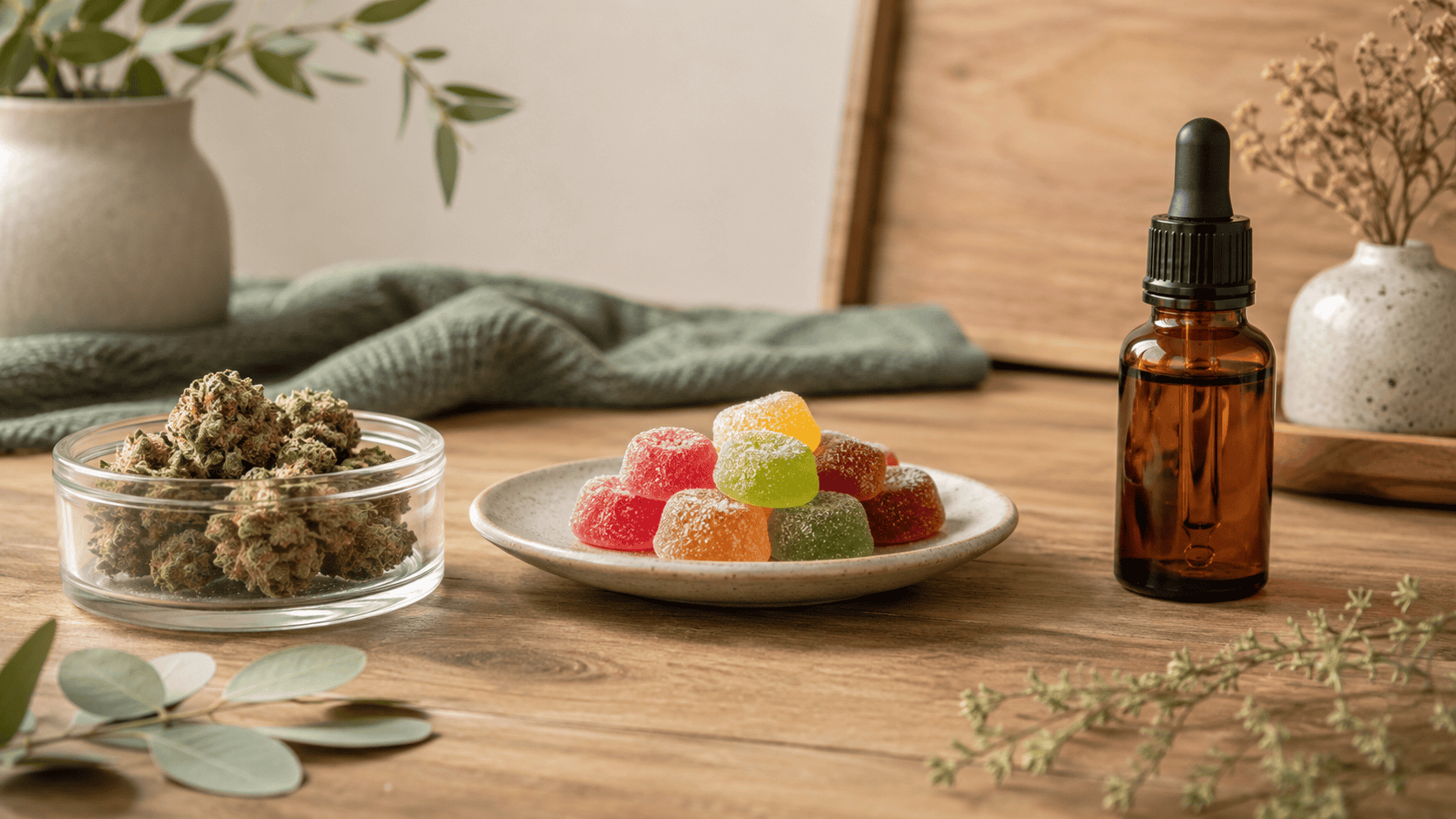
Cannabis flower
Cannabis flower is the dried bud of the cannabis plant. It may be inhaled through smoking or vaporizing. Inhaled cannabis tends to produce effects faster than edible cannabis because cannabinoids enter the bloodstream through the lungs.
Flower products may be described by strain name, indica, sativa, hybrid, THC percentage, CBD percentage, terpene profile, aroma, and potency.
Cannabis edibles
Cannabis edibles are products that are eaten or drunk. They may include gummies, chocolates, baked goods, beverages, capsules, and other ingestible formats.
Edibles are processed through digestion, which means effects usually take longer to begin and may last longer compared with inhaled cannabis.
Cannabis tinctures and oils
Cannabis tinctures and oils are liquid cannabis products. They may contain THC, CBD, or a combination of cannabinoids. Some are used under the tongue, while others are swallowed, depending on the product instructions.
Tinctures and oils are often compared with edibles because both may involve slower onset than inhaled cannabis. They may also make it easier for adults to review cannabinoid content on the product label.
Why Product Format Matters
When adults compare cannabis flower, edibles, and tinctures, product format matters because the body absorbs cannabinoids differently.
Health Canada explains that inhaled cannabis effects can begin within seconds to minutes, while eating or drinking cannabis can take 30 minutes to 2 hours. Edible effects may also last much longer, sometimes up to 24 hours.
That difference is important for anyone researching cannabis for pain-related reasons. A product that begins quickly may also fade sooner, while a product that takes longer to begin may last longer than expected.
Format can influence:
- Onset time
- Duration
- Intensity
- Impairment risk
- Side effects
- Label comparison
- Personal preference
- Suitability for different routines
The product format does not guarantee a specific outcome. It simply helps adults understand what to compare.
Cannabis Flower: What Adults Should Know
Cannabis flower is one of the most traditional cannabis formats. It is often categorized by strain name, THC level, CBD level, terpene profile, and indica/sativa/hybrid label.
Some adults prefer flower because the effects of inhaled cannabis are typically felt faster than edibles. However, inhaled cannabis also carries its own considerations, especially when smoked.
Adults comparing flower should look beyond strain names. A product’s THC percentage, CBD content, terpene profile, and personal tolerance may matter more than whether it is labelled indica, sativa, or hybrid.
Important points about cannabis flower:
- Effects may begin faster than edibles.
- THC-dominant flower can cause impairment.
- Smoking cannabis may irritate the lungs.
- Strain names do not guarantee effects.
- Higher THC does not always mean a better experience.
- Individual response can vary widely.
For readers who want more background, this is a good place to internally link to your KT blog on Cannabis Strain Labels, Sleep and Pain.
Suggested internal anchor text:
learn how cannabis strain labels relate to sleep and painCannabis Edibles: Why Timing Matters
Cannabis edibles are popular because they are discreet, familiar, and do not involve smoking. However, edibles require extra caution because their effects can be delayed and long-lasting.
Health Canada notes that eating or drinking cannabis can take 30 minutes to 2 hours to produce effects, and those effects can last up to 24 hours. Health Canada’s consumer information page also lists ingestible cannabis onset at 30 minutes to 2 hours, with effects commonly lasting 4 to 8 hours.
This delayed onset is one reason some adults have uncomfortable edible experiences. A person may not feel effects right away and may assume the product is not working, even though effects may still be developing.
Important points about cannabis edibles:
- Effects may take longer to begin.
- Effects may last longer than expected.
- THC edibles can cause impairment.
- Product labels and serving information matter.
- Edibles can be mistaken for regular food if not stored securely.
- Effects vary by product and person.
For readers who want a deeper explanation, this section can internally link to your KT blog on Cannabis Edibles and Pain in Canada.
Suggested internal anchor text:
read more about cannabis edibles and pain in CanadaCannabis Tinctures and Oils: How They Compare
Cannabis tinctures and oils are liquid formats that may contain CBD, THC, or both. Some adults compare tinctures with edibles because both can involve slower onset than inhaled cannabis, depending on how the product is used.
Tinctures and oils may appeal to adults who want to compare product labels more carefully. Labels may show total THC, total CBD, cannabinoid concentration, ingredients, and directions.
However, tinctures are not automatically better for pain. Like other formats, their effects depend on cannabinoid profile, product design, individual response, health history, and whether THC is present.
Important points about tinctures and oils:
- They may contain CBD, THC, or both.
- THC-containing oils may impair.
- Label reading is important.
- Effects may vary by product and person.
- CBD can still affect the body and may interact with medications.
- They should not be treated as a guaranteed pain solution.
This is a strong section to internally link to your KT blog on CBD Oil for Pain in Canada.
Suggested internal anchor text:
compare CBD oil and other cannabis formatsTHC vs CBD Across Product Formats
Whether a product is flower, edible, or tincture, the cannabinoid profile matters.
THC
THC is intoxicating. It can affect mood, perception, reaction time, coordination, sleepiness, and attention. THC may create stronger noticeable effects, but it can also cause unwanted effects such as anxiety, dizziness, confusion, nausea, or impairment.
CBD
CBD is not intoxicating in the same way as THC. Some adults are interested in CBD because they want to avoid feeling high. However, CBD is still active in the body and may interact with medications.
Balanced THC:CBD products
Some cannabis products contain both THC and CBD. These may feel different from THC-dominant or CBD-dominant products, but any product containing THC may still impair.
A helpful comparison is:
- THC-dominant products: more likely to create intoxication
- CBD-dominant products: less likely to create a high, but still active
- Balanced products: may still impair if THC is present
- Format: affects timing and duration
- Individual response: varies widely
This is a good place to internally link to your KT blog on CBD vs THC for Pain Relief in Canada.
Suggested internal anchor text:
learn more about CBD vs THC for pain relief in CanadaFlower vs Edibles vs Tinctures: Which Format Lasts the Longest?
In general, edible cannabis tends to last longer than inhaled cannabis.
Health Canada lists inhaled cannabis effects as beginning within seconds to minutes, while eating or drinking cannabis may take 30 minutes to 2 hours and last up to 24 hours. Health Canada’s consumer information also lists inhaled effects as commonly lasting 2 to 4 hours, while ingestible cannabis effects may last 4 to 8 hours.
That does not mean edibles are better. It simply means they may last longer and require more caution.
A simple format comparison:
Format General onset General duration Key consideration Flower Faster Shorter than edibles Inhalation risks and THC impairment Edibles Slower Longer-lasting Delayed effects and overconsumption risk Tinctures/Oils Varies by use Varies Label comparison and cannabinoid content This table should be used for education only. Exact timing can vary by product, individual, food intake, tolerance, and THC/CBD content.
Are Edibles, Flower, or Tinctures Better for Pain?
There is no single “best” cannabis format for pain.
Cannabinoid research suggests cannabis-based products may have possible benefit in some chronic pain areas, but results vary by condition, product type, and individual response. A 2025 review noted that evidence is strongest for neuropathic pain and multiple sclerosis-related spasticity, while results for fibromyalgia, osteoarthritis, and musculoskeletal pain remain inconsistent.
This means adults should be cautious with broad claims like:
- “Edibles are best for pain.”
- “Flower works better than tinctures.”
- “CBD oil fixes chronic pain.”
- “THC is the strongest pain option.”
A more accurate statement is:
Different cannabis formats may produce different experiences, but pain relief is not guaranteed. Adults with ongoing pain should speak with a healthcare professional to understand the cause and available options.
Possible Side Effects and Safety Considerations
All cannabis formats can cause side effects, especially products containing THC.
Possible side effects may include:
- Sleepiness
- Dizziness
- Confusion
- Anxiety or panic
- Nausea or vomiting
- Dry mouth
- Increased heart rate
- Reduced concentration
- Impaired coordination
- Slower reaction time
- Next-day grogginess
- Medication interactions
Health Canada’s medical cannabis side-effects information notes that long-term use may involve concerns such as tolerance, problematic cannabis use, and withdrawal-type symptoms when stopping abruptly.
THC-containing products should not be combined with driving, operating equipment, or activities that require coordination and fast reaction time.
When Pain Should Be Checked by a Healthcare Professional
Cannabis should not be used to ignore serious symptoms.
Adults should seek medical guidance if pain is:
- Severe
- Sudden
- Worsening
- Linked to injury
- Lasting longer than expected
- Associated with swelling, numbness, weakness, or fever
- Affecting sleep, mobility, or daily life
- Connected with unexplained weight loss
- Different from the person’s usual pain pattern
Pain is a signal. Understanding the cause matters.
A healthcare professional can help determine whether pain is muscular, nerve-related, inflammatory, injury-related, chronic, or connected with another condition.
How Should Canadians Compare Cannabis Formats?
Adults comparing cannabis flower, edibles, and tinctures should look at more than product type.
Useful comparison points include:
- THC content
- CBD content
- THC:CBD ratio
- Product format
- Onset time
- Duration
- Personal tolerance
- Previous cannabis experience
- Current medications
- Side effects
- Driving or work responsibilities
- Storage and safety
- Whether pain has been medically assessed
The safest approach is to treat product format as one part of the decision, not the whole answer.
Frequently Asked Questions
Is cannabis flower better than edibles for pain?
Not necessarily. Flower may produce effects faster, while edibles may last longer. Neither format should be described as automatically better for pain. Effects vary by person, product, THC/CBD content, and health history.
Are edibles stronger than flower?
Edibles can feel stronger or last longer for some adults because they are processed through digestion. Health Canada notes that edible cannabis can take longer to produce effects and may last up to 24 hours.
Are tinctures the same as edibles?
Not exactly. Tinctures and oils are liquid cannabis products, while edibles are foods or drinks containing cannabis. Depending on how a tincture is used, timing and effects may differ.
Is CBD better than THC for pain?
There is no universal answer. CBD is not intoxicating in the same way as THC, while THC can create impairment and stronger noticeable effects. Research differs by condition and product type.
Which cannabis format lasts the longest?
Edibles often last longer than inhaled cannabis. Health Canada’s consumer information lists ingestible cannabis effects as commonly lasting 4 to 8 hours, while inhaled effects commonly last 2 to 4 hours.
Should I speak with a healthcare professional about cannabis and pain?
Yes, especially if pain is ongoing, severe, worsening, injury-related, or connected with other health conditions or medications.
Final Thoughts
Cannabis flower, edibles, and tinctures each offer different timing, duration, and product-format considerations. Flower may feel faster. Edibles may last longer. Tinctures and oils may make cannabinoid labels easier to compare.
However, no format should be treated as a guaranteed pain-relief product. Pain can have many causes, and cannabis effects vary by product, THC and CBD content, individual tolerance, health history, and method of consumption.
For Canadian adults researching cannabis flower vs edibles vs tinctures for pain, the best first step is education. Compare product formats carefully, understand onset and duration, be aware of side effects, and speak with a healthcare professional when pain is persistent or health-related.
For general King Tut’s questions about membership, age verification, shipping, and customer support, readers can review the KT FAQ.
Cannabis Health and Safety Resources
Health Canada — Cannabis health effects
Health Canada’s cannabis health effects informationHealth Canada — Consumer information: Cannabis
Health Canada’s cannabis consumer informationHealth Canada — Cannabis for medical purposes: Side effects
Health Canada’s information on cannabis side effects22025 Review — Cannabinoids in Chronic Pain
review of cannabinoids in chronic pain

Copyright 2022 © All Rights Reserved.