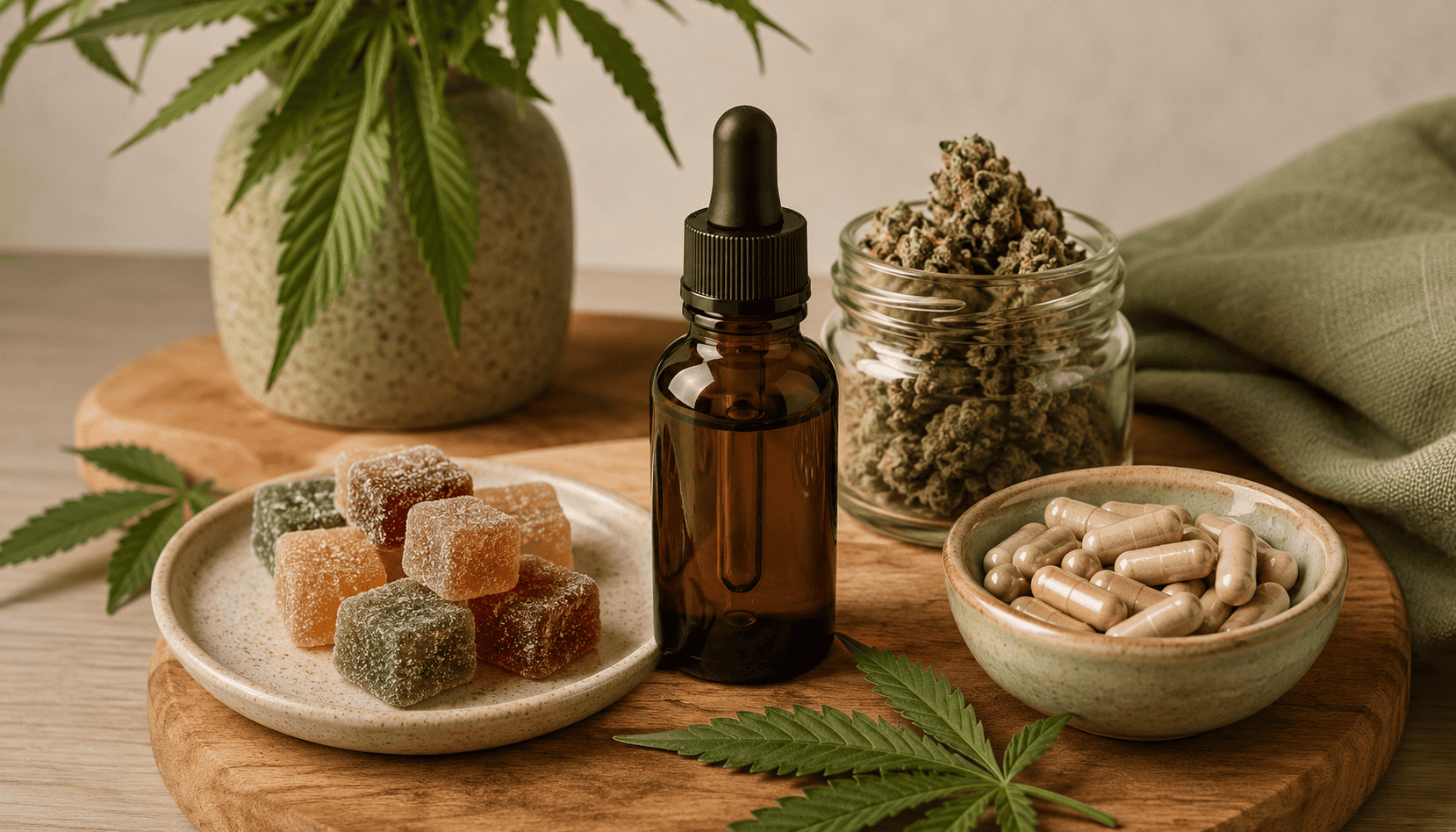
Cannabis products are often described by their cannabinoid profile. One phrase Canadian adults may come across is 1:1 THC:CBD, which usually means the product contains a similar amount of THC and CBD.
For people researching cannabis and pain, 1:1 THC:CBD products can be confusing. Some adults hear that balanced products may feel different from THC-dominant or CBD-only options, while others want to understand whether combining THC and CBD changes the experience.
The most important point is this: 1:1 THC:CBD products should not be treated as a guaranteed pain-relief solution.Pain can have many causes, and cannabis effects can vary widely by person, product, dose, format, tolerance, medication use, and health history.
Health Canada explains that THC causes the intoxicating effects of cannabis, while CBD is not intoxicating in the same way but can still affect the brain and body.
This guide explains what 1:1 THC:CBD means, how balanced cannabis products differ from THC-only or CBD-only products, what current research says about cannabinoids and chronic pain, and what Canadians should consider before discussing cannabis with a healthcare professional.
This article is for general education only and is not medical advice.
A 1:1 THC:CBD product generally means the product contains roughly equal amounts of THC and CBD.
For example, a product may be described as balanced if it contains similar levels of:
However, “1:1” does not always mean the experience will feel mild, predictable, or the same for every adult.
The product format still matters. A 1:1 edible may feel different from a 1:1 oil or inhaled cannabis product because onset time and duration can differ. Health Canada notes that eating or drinking cannabis can take 30 minutes to 2 hours to produce effects and may last up to 24 hours, while inhaled cannabis can take effect much faster.
THC stands for tetrahydrocannabinol. It is the main intoxicating cannabinoid in cannabis.
THC can affect:
Because THC is intoxicating, it can impair driving, work, and activities that require focus or coordination. Health Canada’s information for healthcare professionals notes that THC-predominant cannabis can impair psychomotor and cognitive skills needed for driving.
THC may also cause unwanted effects such as anxiety, dizziness, confusion, nausea, panic, or feeling overly impaired.
CBD stands for cannabidiol. CBD is not intoxicating in the same way as THC, but it is still active in the body.
Some adults are interested in CBD because they want to avoid the high associated with THC. However, CBD is not risk-free. It may cause side effects, may interact with medications, and may not be suitable for everyone.
In a 1:1 product, CBD does not erase THC. If THC is present, impairment is still possible.
Some adults research balanced THC:CBD products because they want to understand how THC and CBD may work together.
People may be searching for information about:
These are common search topics, but interest does not prove that a product works for pain.
A balanced way to understand 1:1 products is:
Cannabinoid research for chronic pain is still developing. Some studies suggest cannabinoids may provide modest or moderate benefit for certain chronic pain conditions, but results vary by pain type, cannabinoid formulation, product format, and patient group.
A 2025 review reported that cannabinoids may have moderate efficacy in some areas such as neuropathic pain, fibromyalgia, cancer-related pain, and multiple sclerosis-related spasticity, while emphasizing that safety, product type, and patient differences matter.
Another 2025 review noted that the evidence is strongest for neuropathic pain and multiple sclerosis-related symptoms, while findings for other areas such as fibromyalgia, osteoarthritis, and musculoskeletal pain are less consistent.
That means a 1:1 product should not be described as a proven answer for every kind of pain. Pain can be muscular, nerve-related, inflammatory, injury-related, chronic, temporary, or connected with another medical condition.
For more information on how cannabis strain labels relate to pain, read our guide to Cannabis Strain Labels, Sleep and Pain in Canada.
Not necessarily.
CBD may change the overall experience for some adults, but a 1:1 product still contains THC. That means intoxication and impairment are still possible.
A balanced product may still affect:
The amount of THC matters. The product format matters. The person’s tolerance matters.
A 1:1 edible can also feel stronger or last longer than expected because edible cannabis has delayed onset and longer duration compared with inhaled formats. Health Canada explains that eating or drinking cannabis can take 30 minutes to 2 hours to produce effects and can last up to 24 hours.
A 1:1 ratio can appear in different product formats. The ratio may be similar, but the experience can differ.
Edibles are eaten or drunk. They may include gummies, chocolates, beverages, or capsules.
Edibles require extra caution because effects can take longer to begin and may last longer than expected. BC’s edible cannabis fact sheet notes that effects may take 30 minutes to 2 hours to begin and up to 4 hours to peak.
Oils and tinctures are liquid cannabis products. They may make it easier to compare cannabinoid amounts on the product label, but THC-containing oils can still impair.
Dried flower with both THC and CBD may feel different from THC-dominant flower. If inhaled, onset may be faster than edibles, but inhalation carries its own risks and considerations.
Capsules are pre-measured, but they are processed through digestion and may have delayed onset similar to edibles.
No format should be described as automatically better for pain. The correct comparison is about timing, duration, label information, side effects, and personal suitability.
Adults comparing 1:1 THC:CBD products should read product information carefully.
Important details include:
For edible cannabis, Health Canada’s packaging and labelling guide states that each immediate container must not contain more than 10 mg of THC.
This matters because a product’s package, serving size, and cannabinoid amount should be understood before assumptions are made.
Because 1:1 products contain THC, they may cause THC-related side effects. CBD may also cause side effects or interact with medications.
Possible side effects may include:
Health Canada lists possible concerns from cannabis use, including tolerance, problematic cannabis use, and withdrawal-type symptoms when cannabis use is stopped abruptly after long-term use.
Adults should avoid driving, operating equipment, or doing safety-sensitive tasks after consuming THC-containing products.
Yes. Cannabis products may interact with medications, especially when THC or CBD is combined with substances that affect sleepiness, dizziness, mood, liver metabolism, or the central nervous system.
People should be cautious if they take:
Anyone considering cannabis for pain or another health-related reason should discuss it with a healthcare professional or pharmacist, especially if they use prescription medication.
Pain should not be ignored or covered up without understanding the cause.
Adults should seek medical guidance if pain is:
Cannabis may be part of a broader conversation, but pain management should start with understanding why the pain is happening.
A 1:1 THC:CBD product usually contains similar amounts of THC and CBD. It may come in formats such as oils, tinctures, edibles, capsules, or flower.
They can. If the product contains THC, intoxication and impairment are possible. CBD does not remove all THC effects.
There is no universal answer. Cannabinoid research suggests possible benefit for some chronic pain conditions, but evidence varies by condition, product, cannabinoid profile, and person. No 1:1 product should be treated as a guaranteed pain solution.
Yes. Edibles are processed through digestion and may take longer to feel. Oils and tinctures may differ depending on how they are used and how the product is formulated.
No. If a product contains THC, it can impair reaction time, coordination, and judgement. Driving or operating equipment should be avoided.
Yes, especially if pain is chronic, severe, injury-related, or connected with medications or other health conditions.
1:1 THC:CBD products are often described as balanced because they contain similar amounts of THC and CBD. For Canadian adults researching cannabis and pain, that balance can be an important product feature to understand.
However, balanced does not mean risk-free, non-intoxicating, or guaranteed to work. THC can still impair. CBD can still affect the body. Edibles can last longer than expected. Product format, dose, tolerance, health history, and medications all matter.
For adults researching 1:1 THC:CBD products for pain in Canada, the safest first step is education. Read labels carefully, understand THC and CBD content, consider onset and duration, and speak with a healthcare professional when pain is ongoing or health-related.

Copyright 2022 © All Rights Reserved.