CBD and THC are two of the most talked-about compounds found in cannabis. For Canadians researching cannabis and pain relief, one of the most common questions is simple: CBD vs THC for pain relief — which one works better?
The honest answer is that it depends. CBD and THC interact with the body differently, and people may respond differently depending on the type of discomfort, product format, personal tolerance, health history, and whether they are using cannabis for medical or non-medical reasons.
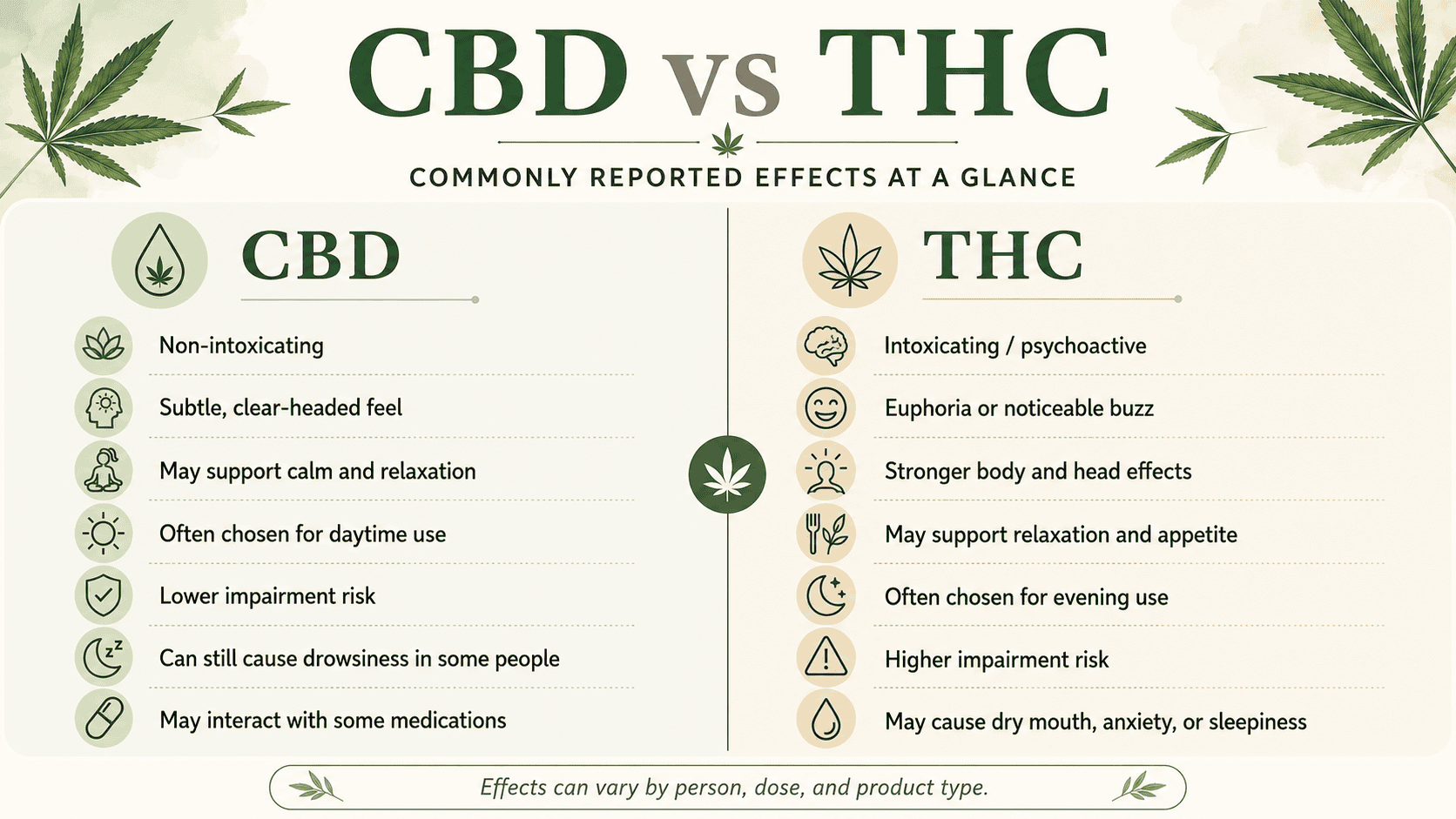
THC is the intoxicating compound in cannabis that creates the “high” feeling. CBD is non-intoxicating, but that does not mean it has no effect on the body. Health Canada notes that CBD can still affect the brain and nervous system, and cannabis products that make health claims are regulated differently than general adult-use cannabis products.
This guide explains the difference between CBD and THC, what current research suggests about pain, and what Canadians should know before making decisions.
CBD stands for cannabidiol. It is one of the main cannabinoids found in the cannabis plant.
CBD is commonly described as non-intoxicating because it does not create the same “high” associated with THC. That is one reason many people are curious about CBD when researching wellness, discomfort, inflammation, sleep, stress, or general balance.
However, non-intoxicating does not mean risk-free. CBD can still interact with the body, may interact with certain medications, and may not be suitable for everyone. Health Canada has noted that CBD can have effects on the brain and nervous system, even though it is not intoxicating.
CBD may appear in different product types, including oils, capsules, edibles, topicals, and dried cannabis products. In Canada, cannabis products are regulated, and readers should avoid products that make exaggerated or unsupported medical claims.
THC stands for tetrahydrocannabinol. It is the main intoxicating cannabinoid in cannabis.
THC is responsible for the euphoric or “high” feeling often associated with cannabis. It can also affect mood, appetite, perception, relaxation, sleepiness, and short-term memory.
Because THC is intoxicating, it may not be suitable for everyone. Some people may experience unwanted effects such as anxiety, dizziness, dry mouth, impaired attention, or feeling overly sedated. THC can also impair driving and other tasks that require focus and coordination.
For pain-related research, THC and THC-containing cannabis products have received more attention than CBD alone. However, that does not mean THC is automatically “better” for everyone. It may come with more noticeable side effects, especially for people who are new to cannabis or sensitive to intoxicating products.
How Do CBD and THC Work Differently?
CBD and THC both interact with the body’s endocannabinoid system, but they do not behave the same way.
THC binds strongly to cannabinoid receptors, especially CB1 receptors in the brain and nervous system. This is one reason THC can create intoxication and changes in perception.
CBD works differently. It does not create the same intoxicating effect and may influence several systems in the body more indirectly.
In simple terms:
This difference matters when Canadians are comparing cannabis products for comfort, relaxation, or pain-related research.
To better understand how these cannabinoids work together, read our guide on The relationship between CBD and THC and how much of each is found in cannabis products.
Current research suggests that THC-containing products may have more evidence for certain types of chronic pain, especially neuropathic pain, but the benefits are usually described as modest and may come with more side effects.
A 2025 review on cannabis-based products for chronic pain found that products with comparable THC-to-CBD ratios or high THC-to-CBD ratios may result in small improvements in pain, while also increasing common adverse effects during short-term treatment. The review also noted that low THC-to-CBD products may not improve outcomes and that more long-term studies are needed.
That means the answer is not as simple as “CBD is better” or “THC is better.”
A more balanced answer would be:
THC or balanced THC:CBD products may have stronger evidence for some pain conditions, but they may also bring more side effects. CBD alone may appeal to people who want a non-intoxicating option, but the evidence for pain relief is less consistent.
For Canadians, the best choice depends on the person, the type of pain, health history, product format, and guidance from a qualified healthcare professional.
While much of the research on cannabinoids has focused on chronic pain, researchers are also investigating their potential role in other conditions, including migraine. If you’re interested in what current studies say about cannabis and migraine, read our guide to Cannabis for Migraine in Canada.
Some people are more interested in CBD because it does not create the same intoxicating effects as THC.
CBD may be preferred by people who:
However, CBD should not be marketed as a cure or guaranteed pain reliever. The research is still developing, and people can respond differently.
CBD can also interact with certain medications, so anyone using prescription medication or managing a health condition should speak with a healthcare professional before using CBD for health-related reasons.
THC may be of interest to people researching stronger cannabis effects or cannabis products that may support relaxation, sleep, appetite, or discomfort management.
Some research suggests THC-containing cannabis products may be more relevant for certain pain-related outcomes than CBD alone, but THC also has a higher chance of causing noticeable impairment or unwanted effects.
THC may not be suitable for people who:
THC can affect attention, reaction time, and coordination. It should be approached carefully, especially by people who are new to cannabis.
Some cannabis products contain both CBD and THC. These are often called balanced products when the ratio is close to equal.
Balanced CBD:THC products may appeal to people who want some THC effects while also including CBD. Some research has looked at products with comparable THC-to-CBD ratios for chronic pain, but results are still not a guarantee for every person.
Balanced products can still be intoxicating if they contain THC. The presence of CBD does not remove all THC-related effects.
For educational content, it is best to describe balanced products carefully:
For chronic pain, current evidence is mixed. Some studies suggest cannabis-based products may provide small to moderate benefits for certain pain conditions, while other studies show limited or inconsistent results.
The evidence appears strongest in areas such as neuropathic pain and multiple sclerosis-related symptoms, while results for conditions like osteoarthritis, fibromyalgia, and general musculoskeletal pain can be less consistent. A 2025 review noted that cannabinoid evidence is strongest for neuropathic pain and multiple sclerosis-related spasticity, while other pain areas remain inconsistent.
This is why broad claims like “CBD cures pain” or “THC is the best pain reliever” should be avoided.
A safer way to say it is:
Cannabis-based products may help some people manage certain types of pain, but results vary, and the research is still developing.
Canadians comparing CBD and THC for pain-related reasons should focus on education first.
Important things to consider include:
Health Canada provides information for people using cannabis for medical purposes, including choosing and using products, potential side effects, and access pathways.
Anyone considering cannabis for a medical reason should speak with a qualified healthcare professional, especially if they have existing health conditions, take medication, are pregnant, or have concerns about mental health.
Both CBD and THC can cause side effects, though the experience may differ.
Possible cannabis-related side effects may include:
THC is more likely to cause intoxication and impairment. CBD is non-intoxicating, but it can still have effects and may interact with medications.
Health Canada lists a range of possible cannabis side effects and recommends caution, especially when cannabis is being used for medical purposes.
For pain relief, THC-containing or balanced THC:CBD products may have stronger evidence for some types of chronic pain, but they also come with a higher chance of impairment and side effects.
CBD may be preferred by people looking for a non-intoxicating option, but the evidence for CBD alone as a pain reliever is less consistent.
The most responsible answer is:
There is no one-size-fits-all winner. THC may offer stronger effects for some people, CBD may be better tolerated by others, and balanced products may fall somewhere in between. The right choice depends on the individual and should be guided by credible information and professional advice when pain is involved.
Is CBD better than THC for pain relief?
Not necessarily. CBD is non-intoxicating and may be preferred by people who want to avoid feeling high, but research on CBD alone for pain is still developing. THC-containing products may have stronger evidence for some pain conditions, but they may also cause more side effects.
Is THC better than CBD for chronic pain?
THC may have stronger evidence for certain types of chronic pain, especially neuropathic pain, but it can also cause intoxication and impairment. It is not automatically better for everyone.
Can CBD and THC work together?
Some products contain both CBD and THC. Balanced products may create different effects than THC-only or CBD-only products, but they can still be intoxicating if they contain THC.
Does CBD get you high?
CBD is considered non-intoxicating and does not create the same high as THC. However, Health Canada notes that CBD can still affect the brain and nervous system.
Should I use CBD or THC for medical pain?
Anyone considering cannabis for pain or another medical reason should speak with a qualified healthcare professional. Pain can have many causes, and cannabis may not be appropriate for everyone.
CBD and THC are both important cannabis compounds, but they are not the same. CBD is non-intoxicating and may appeal to people who want a more subtle option. THC is intoxicating and may have stronger evidence for certain pain-related outcomes, but it also carries a higher risk of impairment and side effects.
For Canadians researching CBD vs THC for pain relief, the best approach is to stay informed, avoid exaggerated claims, and speak with a healthcare professional when pain or medical concerns are involved.
Cannabis education should always be clear, balanced, and realistic. There is no guaranteed answer for everyone, but understanding the difference between CBD and THC is a strong first step.
Interested in learning more about how you can use Edibles of for pain relief? Read our blog, Cannabis Edibles and Pain in Canada: What Adults Should Know

Copyright 2022 © All Rights Reserved.