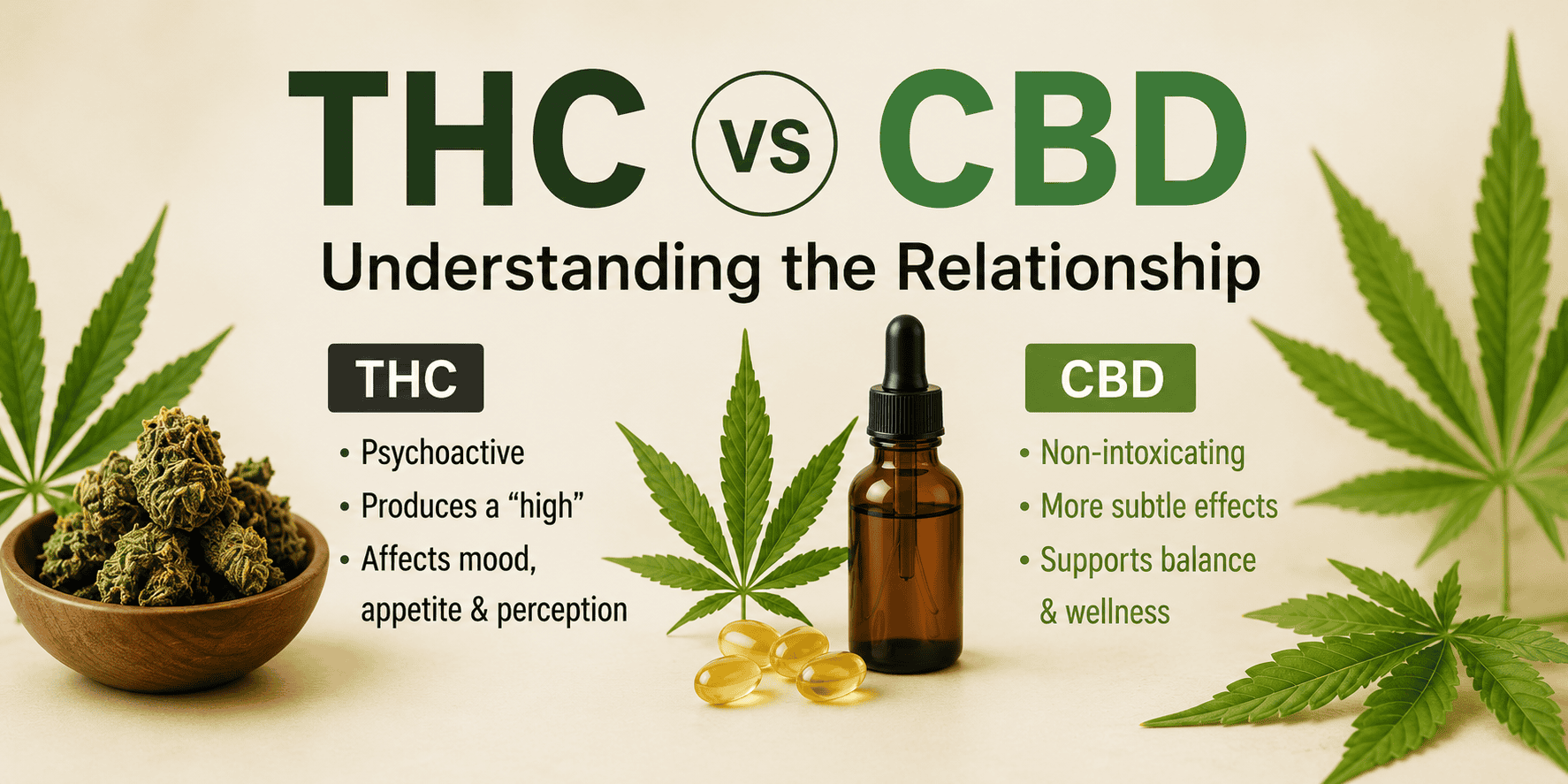
CBD (cannabidiol) and THC (tetrahydrocannabinol) are two of the most well-known cannabinoids found in cannabis. While they share a similar chemical structure, they produce very different effects within the body.
Understanding the relationship between THC and CBD can help consumers make more informed decisions when choosing cannabis products. Whether you’re researching cannabinoid content, exploring different product types, or simply learning more about cannabis, understanding how these compounds interact is an important first step.
THC and CBD are naturally occurring compounds found in cannabis plants.
THC is the primary intoxicating cannabinoid in cannabis and is responsible for the euphoric “high” commonly associated with marijuana.
CBD is considered non-intoxicating and does not produce the same psychoactive effects as THC. However, CBD can still affect the body and may influence several biological systems.
Both compounds interact with the body’s endocannabinoid system, but they do so in different ways.
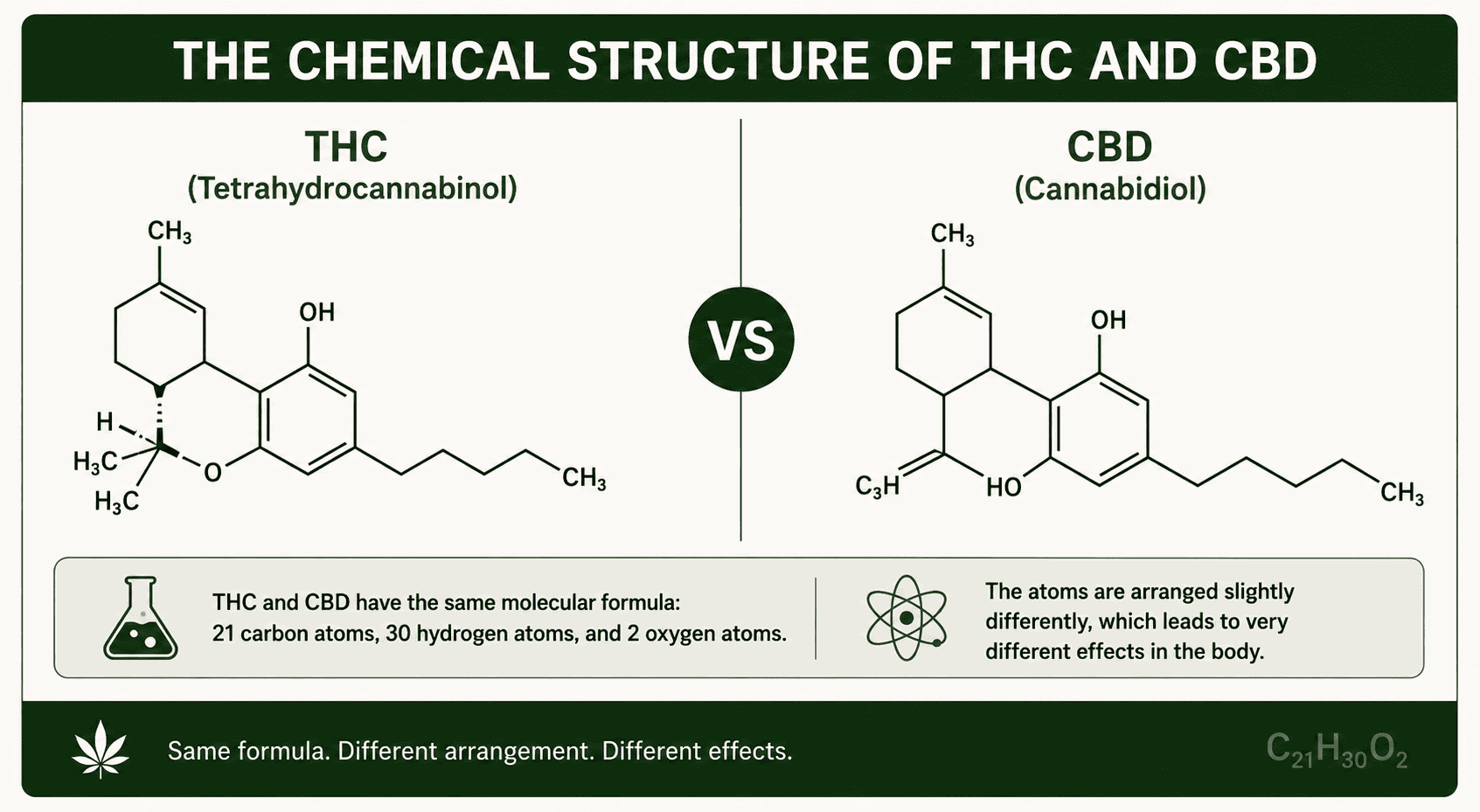
THC and CBD have nearly identical molecular structures. Both contain 21 carbon atoms, 30 hydrogen atoms, and 2 oxygen atoms.
The difference lies in how those atoms are arranged.
Although the variation is small, it changes how each cannabinoid interacts with receptors throughout the body. THC binds more directly to cannabinoid receptors, particularly CB1 receptors in the brain and nervous system. This interaction contributes to the intoxicating effects associated with THC.
CBD interacts more indirectly with the body’s endocannabinoid system and does not create the same psychoactive experience.
Because THC and CBD interact differently with the body’s cannabinoid receptors, consumers often report different experiences with each compound.
THC is commonly associated with:
Euphoria
Relaxation
Altered perception
Increased appetite
Changes in mood
Intoxication
CBD is commonly associated with:
A non-intoxicating experience
A more subtle effect profile
Use in a variety of wellness-focused products
Individual experiences can vary significantly depending on dosage, product format, cannabinoid concentration, and personal tolerance.
Wondering how these effects translate to pain management? Explore our detailed comparison, CBD vs THC for Pain Relief in Canada: Which One Works Better?, to learn how each cannabinoid may be used in wellness and pain relief products.
Although THC and CBD are different cannabinoids, they are often found together in cannabis products.
Some products are THC-dominant, meaning they contain high levels of THC and relatively little CBD. Others are CBD-dominant, containing higher levels of CBD and lower levels of THC. Balanced products contain meaningful amounts of both cannabinoids.
Many consumers choose products containing both THC and CBD because they prefer a more balanced cannabinoid profile. The experience can differ substantially from products that contain only THC or only CBD.
Effects will vary from person to person, and no single cannabinoid profile is ideal for everyone.
Cannabis products can contain widely different amounts of THC and CBD.
Some THC-dominant flower strains may contain very high THC levels with minimal CBD. CBD-focused products may contain high concentrations of CBD with little or no THC.
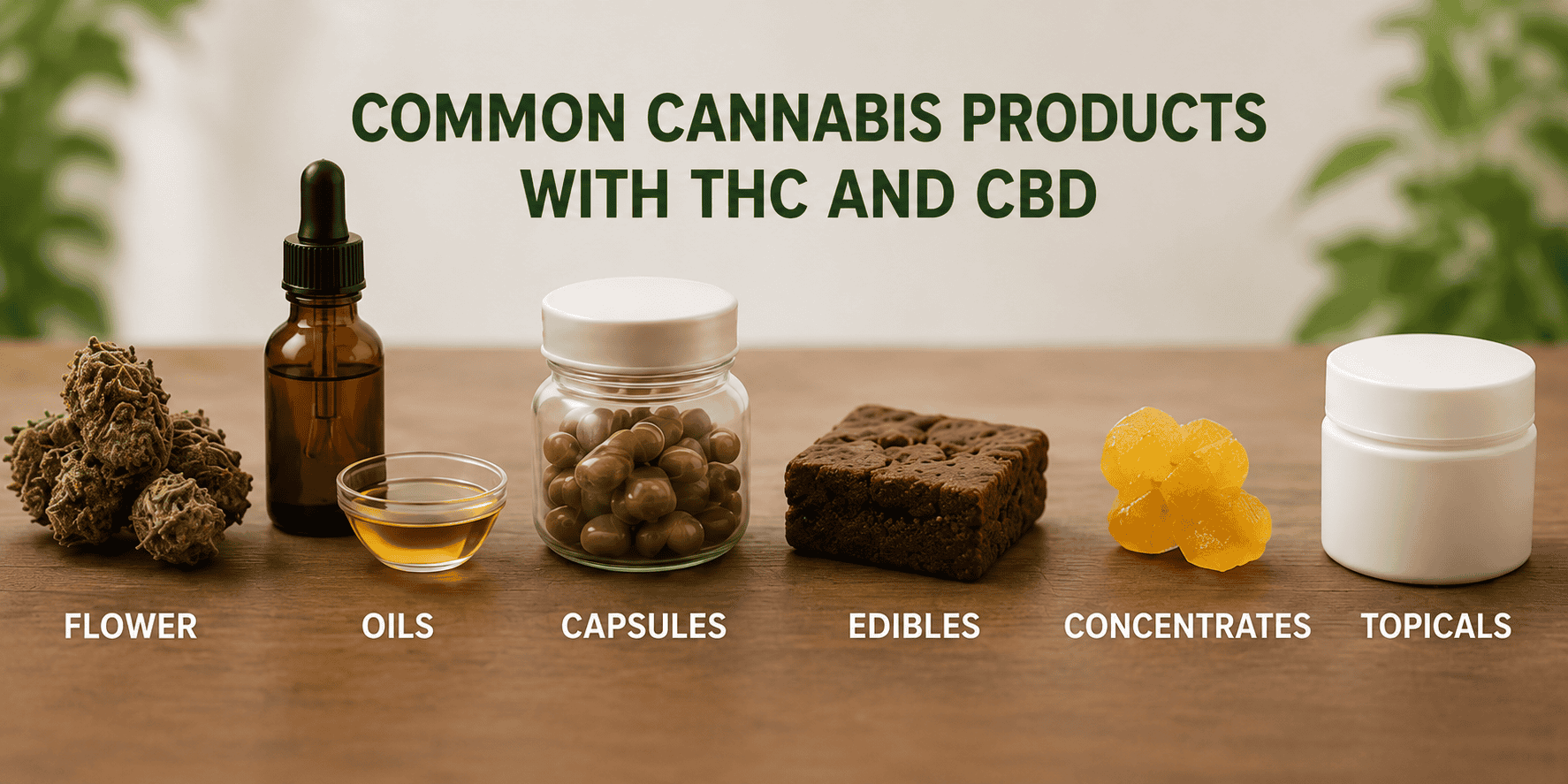
Common product categories include:
Dried cannabis flower
Cannabis oils
Capsules
Edibles
Concentrates
Topicals
The cannabinoid content of a product can usually be found on the product label. Consumers should always review cannabinoid percentages and potency information before purchasing.
When comparing cannabis products, consumers will generally encounter three categories:
Products such as extracts contain higher levels of THC and are more likely to produce intoxicating effects.
Products such as CBD Edibles contain higher levels of CBD and little THC. They are often chosen by consumers seeking a non-intoxicating cannabis experience.
Balanced products that contain both cannabinoids like these 1:1 tinctures, have comparable amounts. They may offer a different experience than products dominated by a single cannabinoid.
Many cannabis cultivars naturally contain multiple cannabinoids.
Manufacturers may also formulate products with both THC and CBD to create specific cannabinoid ratios.
Balanced cannabinoid products continue to be popular among consumers because they provide an alternative to products that contain only THC or only CBD.
As with all cannabis products, effects depend on the individual, the product, the dosage, and personal tolerance.
No. CBD is generally considered non-intoxicating and does not produce the same psychoactive effects associated with THC.
THC and CBD produce different effects and are not directly comparable. THC is intoxicating, while CBD is generally considered non-intoxicating.
Yes. Many cannabis products contain both cannabinoids. Balanced CBD:THC products are widely available in the Canadian cannabis market.
A balanced product typically contains similar amounts of THC and CBD, although exact ratios vary by manufacturer and product type.
Both hemp and marijuana belong to the cannabis family. The primary difference is cannabinoid content, particularly THC concentration.
This depends on the cultivar and product. Some products are bred to contain high levels of THC, while others are developed specifically for higher CBD content.
THC and CBD are the two most recognized cannabinoids found in cannabis, but they interact with the body in different ways. THC is responsible for the intoxicating effects commonly associated with cannabis, while CBD is generally considered non-intoxicating.
Understanding the relationship between THC and CBD can help consumers better navigate the wide variety of cannabis products available today. Whether choosing a THC-dominant, CBD-dominant, or balanced product, understanding cannabinoid content is an important part of making informed purchasing decisions.
As cannabis research continues to evolve, consumers should focus on credible information, realistic expectations, and responsible cannabis use.

Copyright 2022 © All Rights Reserved.